You leave Budva, drive south past Bar, and somewhere around the time the road climbs above the Adriatic and starts curving toward Ulcinj, things change. The first call to prayer drifts down from a hilltop minaret. Signs on the road switch from one language to two, Montenegrin on top and Albanian beneath. A red Albanian flag with a black eagle hangs from a balcony. The cafés along the road serve coffee Turkish-style, in small glasses with sugar on the side, not the espresso culture you left behind up the coast.
You are still in Montenegro, the map confirms it, but the country you are now in looks east, not west. It speaks a different language at home, prays at a different time of day, and has spent the last several centuries figuring out how to be three things at once. Albanian. Mediterranean. Balkan.
This is Ulcinj, the southernmost town on the Montenegrin coast, roughly twenty kilometers from the Albanian border, where ethnic Albanians make up the majority of the municipality's population. If you have already done Kotor and Budva and want to understand the rest of Montenegro, Ulcinj is where you go.
What Makes Ulcinj Different From the Rest of the Coast?
According to the 2023 census, the Ulcinj municipality is roughly 73.5% ethnic Albanian, with Montenegrins, Bosniaks, Serbs, Roma and a few smaller communities making up the rest. On the streets you will hear Albanian dominantly, Montenegrin or Serbian in the background, and Italian or English depending on which café you sit in. Two religions live side by side. Mosques sit a few hundred meters from Orthodox and Catholic churches, and the rhythm of the day is shaped by call to prayer, church bells, and the long Mediterranean lunch in roughly equal parts.
The food is Ottoman and Mediterranean stitched together. The architecture is Venetian foundations, Ottoman additions, Yugoslav blocks, and new builds on top of all of it. Even the way the town faces matters. Ulcinj looks south and east, toward Albania and the open Adriatic, not north and west toward Italy and Croatia like most of the rest of the coast.
The Pirate Past
Then there is the history of the pirates, which sounds like a tourism brochure until you start reading.
From the late sixteenth into the eighteenth century, Ulcinj was one of the most active corsair ports on the Mediterranean. Local sailors operated their own fleets of fusts, brigantines and frigates, often working alongside the Barbary pirates of North Africa, raiding Venetian and Italian shipping up and down the Adriatic. The town ran a thriving slave market. The square in front of the church-mosque used to be called the Slave Square. Today it is called Cervantes Square.
By the late seventeenth century, the operation had grown large enough that some local sources describe it as a small "pirate republic," autonomous in practice if not on paper, with its own captains and rules. The French consul in Durrës wrote in 1718 that the Ulcinj pirates respected neither the sultan nor any other authority in the world. The Ottomans eventually had to clamp down. After the Treaty of Požarevac in 1719, Ulcinj's piracy was officially banned, ships were burned, and the locals had to reinvent themselves as merchants. Which they did, and the merchant fleet that followed was one of the biggest on the Adriatic in the eighteenth and nineteenth centuries.
The Cervantes Question
Local legend says Miguel de Cervantes, the Spanish writer who gave the world Don Quixote, was held captive here between 1575 and 1580. There is a statue in his honor in the Old Town and a square named after him.
The historical record is more complicated. Cervantes was indeed captured by Mediterranean corsairs in 1575 and spent five years as a slave, but most academic sources, including Britannica, place his captivity in Algiers. The Ulcinj story is folklore, dressed up over the centuries, and the town has been telling it for so long that it has become part of the place. Whether it is true matters less than the fact that the locals are not embarrassed to tell it. Sit in the square, look at the statue, decide for yourself.
The Old Town
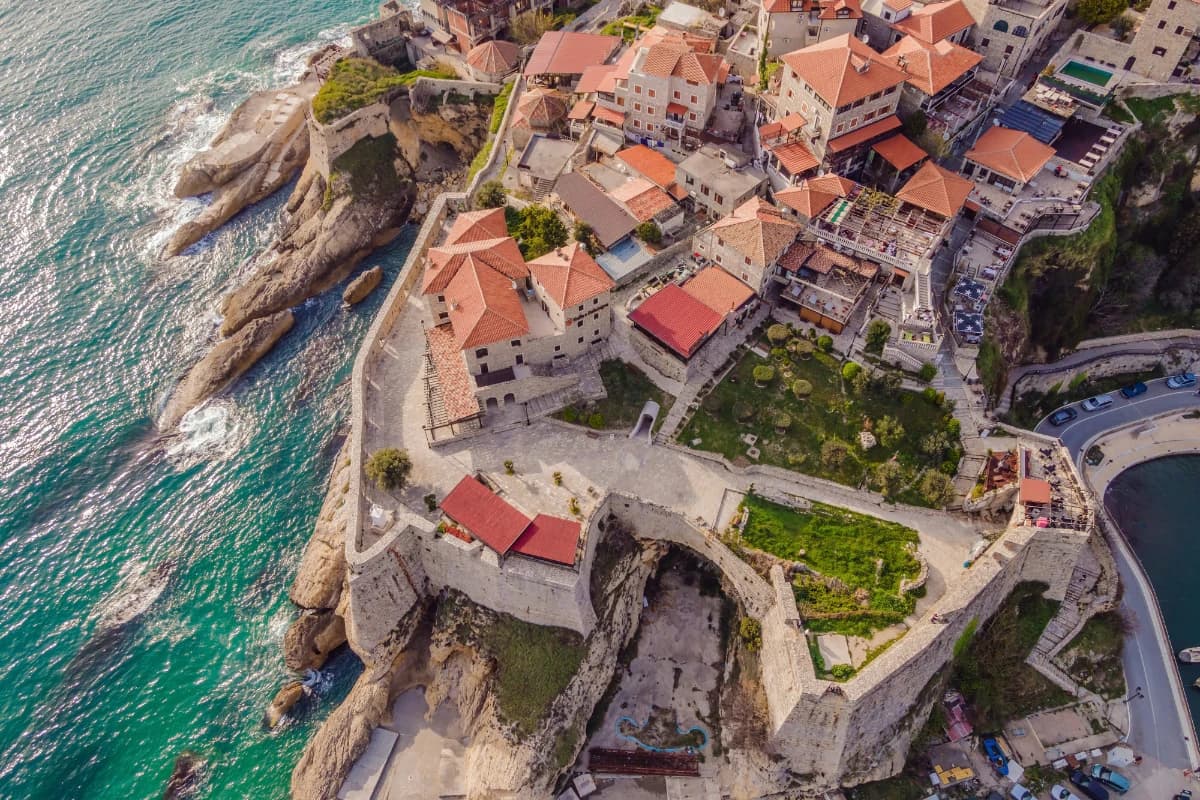
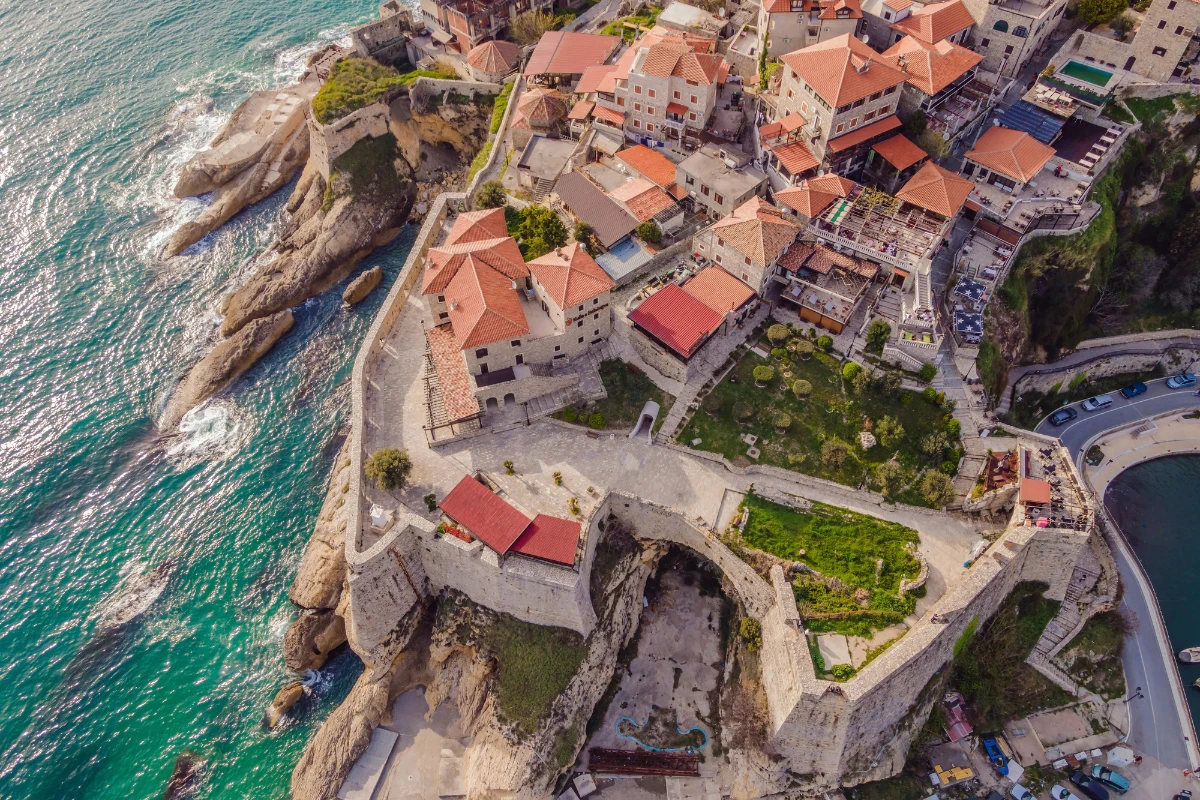
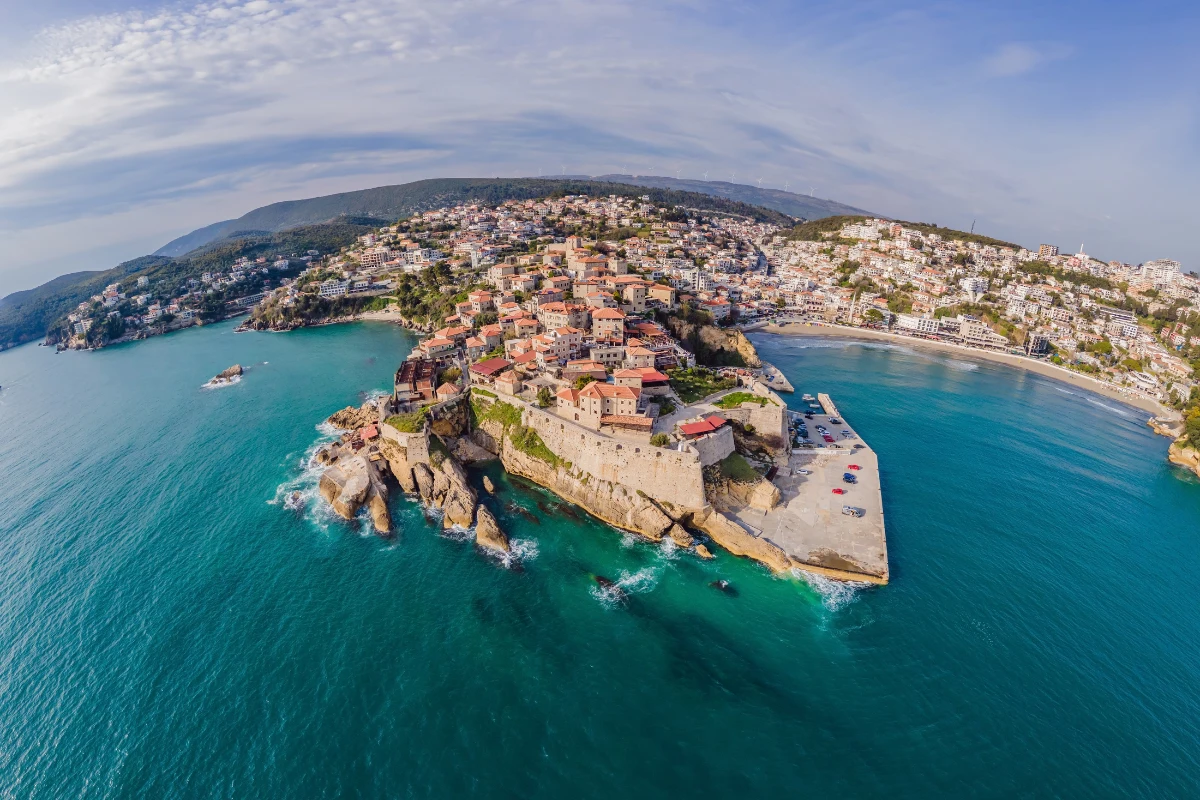
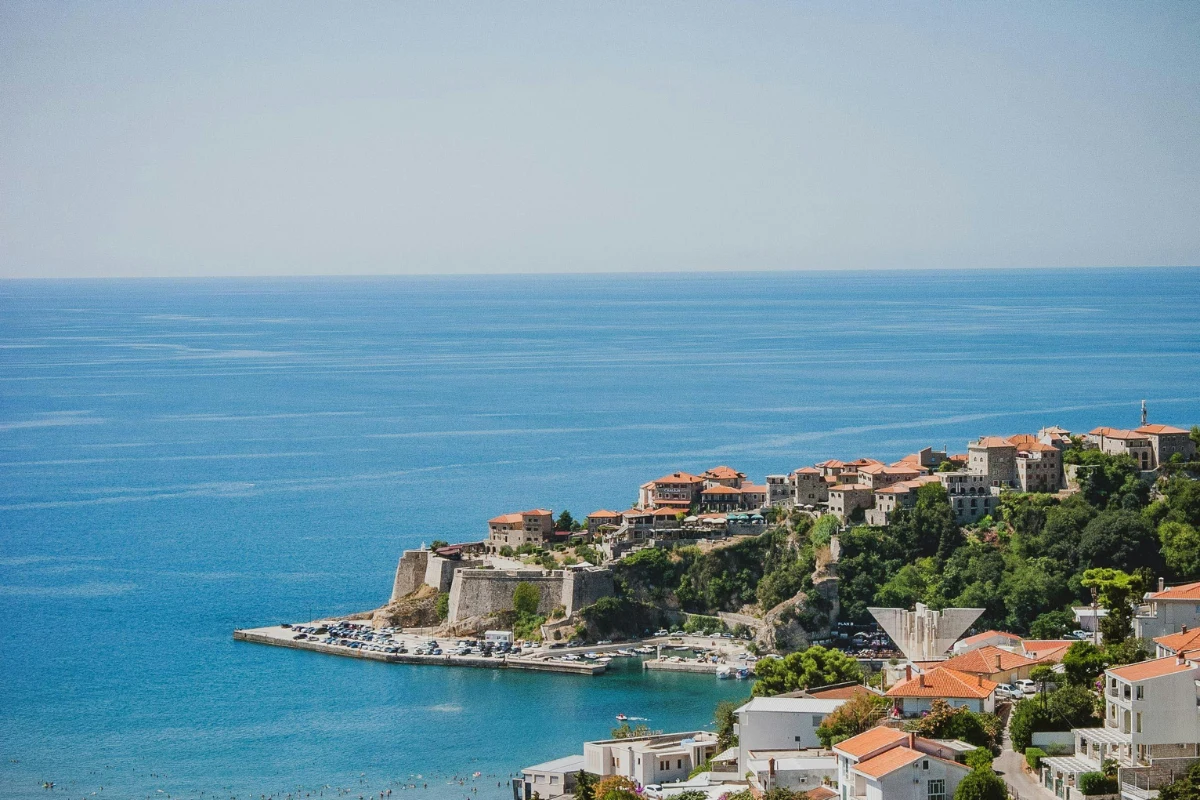
The Stari Grad sits on a rocky cape above the sea, a fortified hilltop you can see from kilometers away when you approach from the north. The walls were first built by Illyrians in the fifth century BC, raised by Romans and Byzantines, expanded by Venetians, and modified by Ottomans. What you see today is layers on top of layers.
You leave the car in the paid lot just below the walls, climb up on foot through the main gate, and find yourself in a small, partly inhabited stone neighborhood. People still live here. Laundry hangs from windows. Cats sleep in the warm spots. A handful of restaurants have terraces that look straight down to the Adriatic and they are the best places in town to be when the sun starts to drop.
The Museum
The Museum of Archaeology, Ethnology and Local History sits near the main gate, housed in a building that was a church in the sixteenth century and later a mosque. Part of the minaret is still standing. Entry runs around €2 to €2.50, audio guide another €2, and the visit takes about thirty minutes. Roman urns, Ottoman-era artifacts, a room dedicated to local pirate captains, some shipwreck pieces. Modest but worth it, especially with the audio guide.
When to Go Up?
The best time to be in the Old Town is the hour before sunset. The light turns the stone walls gold, the air cools off, and the call to prayer comes up from the lower town just as the cafés along the upper walls start filling for dinner. Park below, walk up around five or six in the afternoon, plan to stay for two or three hours.
The Three Beaches of Ulcinj
Ulcinj has three completely different coastal experiences, and the differences matter more than the names suggest. This is the one place in this guide where a quick comparison helps before you commit your afternoon.
| Beach | Length | Terrain | Vibe | Best for | Parking |
|---|---|---|---|---|---|
| Mala Plaža (Small Beach) | ~360 m | Soft dark sand | Crowded town beach, cafés right behind | Quick swim, families with small kids, lunch in town | Paid street parking in town, tight in summer |
| Velika Plaža (Long Beach) | ~12 km | Dark fine sand, shallow water | Long, open, windy, kite and windsurf scene | Wind sports, long walks, escaping crowds | Free or low-cost lots along the access roads |
| Ada Bojana | ~3 km of beach on a triangular river island | Sand | Quiet, nudist tradition, fish restaurants on stilts | Naturists, seafood lovers, kitesurfers | Paid lots near the bridge to the island |
Mala Plaža
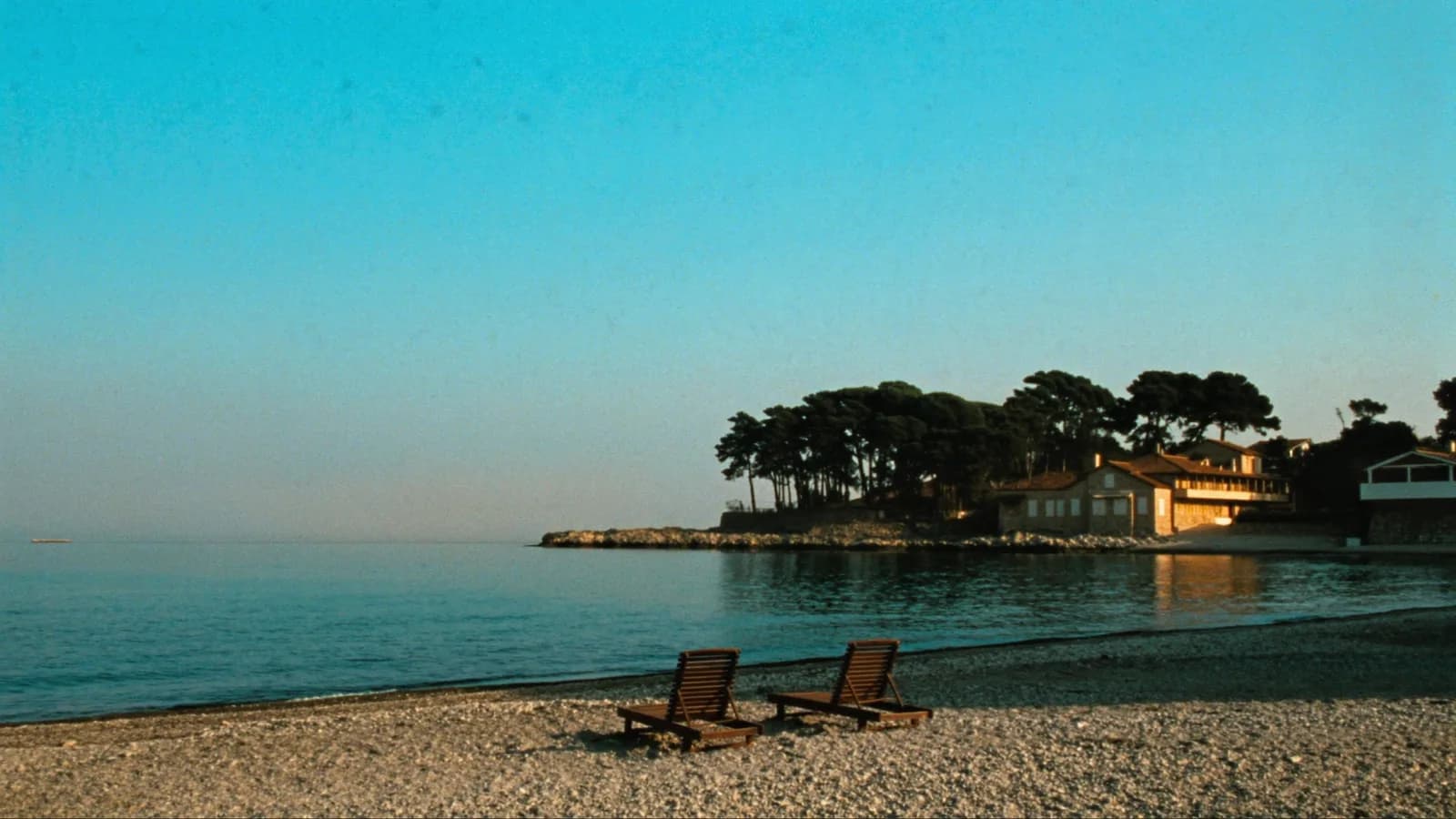
The urban beach. It sits right at the foot of the Old Town, a short curve of dark sand framed by hotels and a promenade lined with cafés. Convenient but tight. In July and August you arrive early or you do not arrive at all.
Velika Plaža
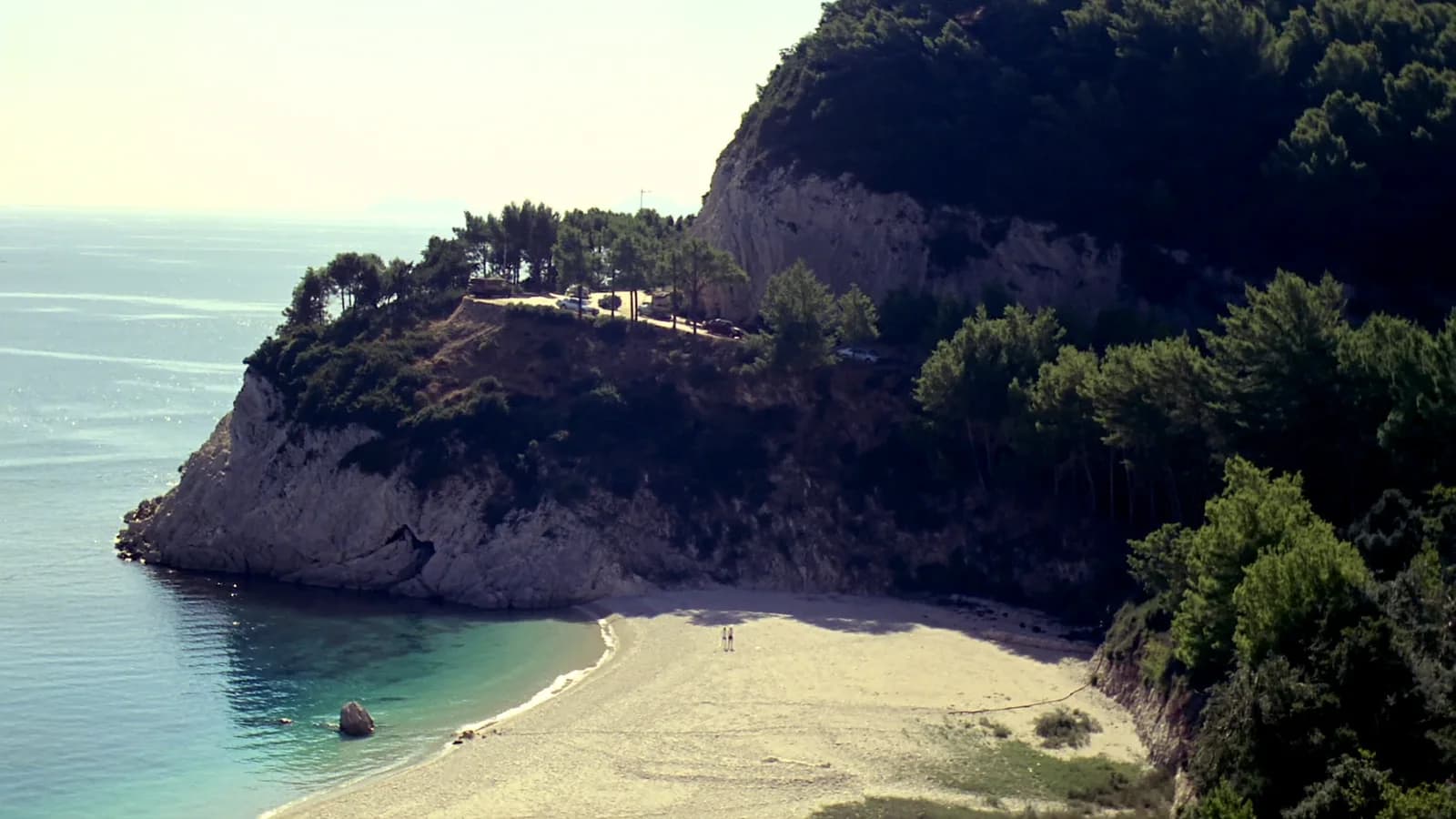
Velika Plaža starts about five kilometers southeast of town and stretches roughly twelve kilometers down to the mouth of the Bojana River, making it one of the longest sand beaches on the Adriatic. The sand is dark, fine, and reportedly rich in minerals, which is why you will see older locals walking barefoot at the water's edge for an hour in the morning. The water is shallow for a long way out, which is great for kids and terrible for anyone who wants to dive in and go.
The wind that comes off the Albanian mountains makes the southern end of the beach one of the best kitesurfing and windsurfing spots in the eastern Mediterranean. Schools and rental shops are clustered down there, near the river mouth. The northern sections are more family-oriented, with longer boardwalks and more developed beach clubs. The middle is where you go if you just want sand and silence.
Ada Bojana
Ada Bojana is its own world. The Bojana River splits into two arms before reaching the sea, and the land between those arms is a triangular island roughly 4.8 square kilometers, with about three kilometers of sandy beach on its Adriatic side. It is the southernmost piece of Montenegrin coast, pressed right up against Albania across the water.
The river side is lined with wooden fish restaurants built on stilts directly over the water, serving fresh river and sea fish that you usually pick yourself from a tank. This is the best seafood on the Montenegrin coast, and most locals will agree without much argument.
Ada Bojana is also the only officially registered nudist beach in Montenegro. The FKK naturist settlement at the northern end of the island opened in 1973 as a Yugoslav-era resort project. The bungalows are dated, the place has a faded retro feel, and it still operates. The rest of the island beach is essentially clothing-optional in practice, meaning you will see both. Worth knowing before you wander down with kids.
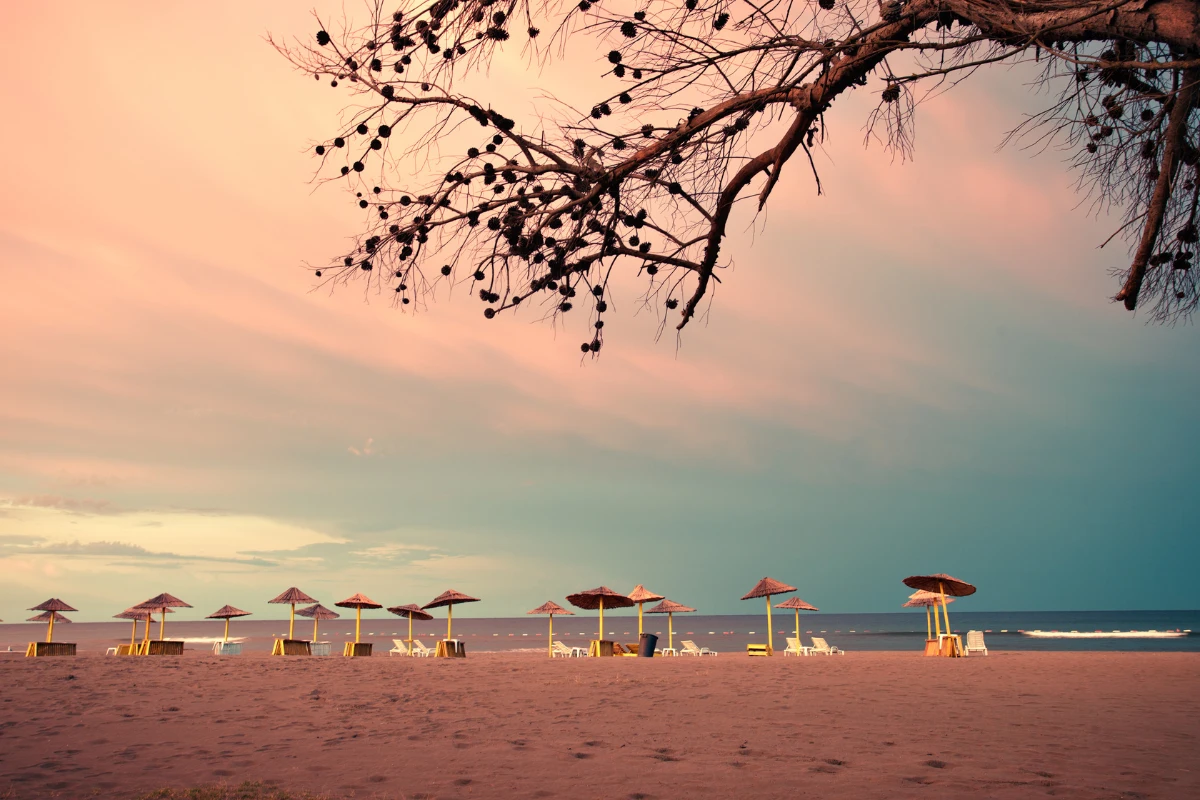
One sad note. Research published by Montenegro's Institute of Hydrometeorology found that roughly 420,000 square meters of beach at Ada Bojana disappeared between the early 1970s and the late 2010s, lost to coastal erosion. Studies on revitalization have been done. Implementation is slower. The island you see today is meaningfully smaller than the one your parents would have seen.
Getting to Ulcinj by Car
Ulcinj sits at the end of the coastal road, there is no faster way around it:
| From | Distance | Drive time |
|---|---|---|
| Bar | ~25 km | 30 min |
| Budva / Bečići | ~65 km | 1 h 15 min |
| Podgorica | ~78 km | 1 h 30 min |
| Tivat airport | ~85 km | 1 h 45 min |
| Dubrovnik (with border crossing) | ~155 km | 3 h+ |
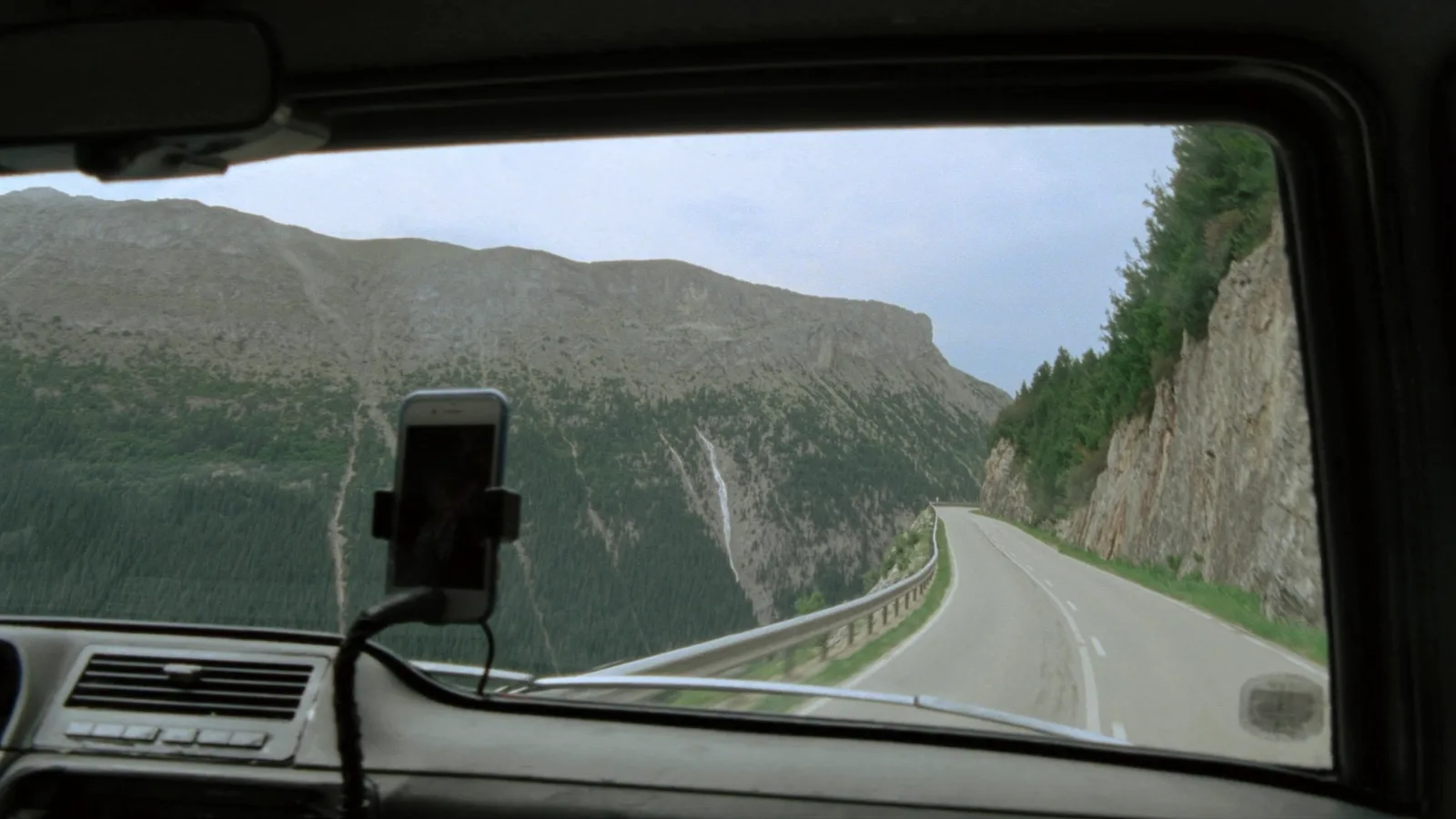
The road from Bar to Ulcinj is the part most people remember. It rises and falls along the coast, occasionally pulling away from the sea to climb over a headland before dropping back down. Some sections have been rebuilt in recent years and are smooth and well-marked. Others are still narrow with tight bends and exposed drops. It is not a flat coastal cruise. Take your time, especially in the late afternoon when the sun is in your eyes coming back north.
If you are starting from our office in Bečići, you are looking at roughly an hour and a quarter of pure driving, longer if you stop in Bar for lunch on the way. Which you probably should.
Crossing Into Albania
No other Montenegrin town puts you this close to Albania. The Sukobin–Muriqan border crossing sits about twenty kilometers southeast of Ulcinj. It is paved on both sides, open twenty-four hours, and in summer the wait can stretch to thirty or forty-five minutes during the busy mid-morning hours. Cross early or late and you usually get through in ten or fifteen minutes.
Shkodër
From the border, Shkodër (or Shkodra) is about another twenty minutes of driving. Total trip from central Ulcinj to central Shkodër, traffic depending, runs forty-five minutes to an hour. Shkodër is one of the oldest cities in Albania, sits at the southern end of the same lake you may have already heard of as Skadar, and has its own old town, a hilltop castle called Rozafa with serious views, and a food scene that runs noticeably cheaper than the Montenegrin coast.
The Rental Car Bit
Important if you want to do this with our car. Crossing into Albania requires a cross-border permit and the appropriate insurance documentation, which has to be arranged in advance. Our roadside assistance is included within Montenegro but does not extend across the border. Get in touch before you book, or at least a day or two before you plan to cross, and we will sort the paperwork. Showing up at Sukobin without it means turning around.
Food
Ulcinj eats differently from the rest of the coast.
The Albanian influence shows up everywhere. Japrak, vine leaves stuffed with rice and meat. Byrek, the layered pastry that comes filled with cheese, spinach or meat, sold from small bakeries early in the morning. Qofte, grilled meat patties that go best with raw onion and bread. And then the fish.
The fish restaurants on Ada Bojana are their own category, and they alone are worth the drive south. You cross the small bridge onto the island, park, pick a restaurant from the row of wooden structures over the water, and order whatever the kitchen has pulled out of the river or the sea that morning. The local specialty is jegulja, Bojana eel, prepared as a stew with onions, peppers and tomato. Eel is eaten elsewhere in Montenegro but the Bojana version is its own thing, with a particular flavor that comes from the brackish water at the river mouth. Order it once. You will remember it.
Ulcinj Through the Seasons
Summer
July and August are peak. The beaches fill, cafés stay open late, the Old Town hums with weekend music and outdoor events. Compared to Budva, Ulcinj tends to fill up slightly later in the summer and clear out slightly later in the autumn, which gives you a small but useful window if you time it right.
The Sweet Spot
September is arguably the best month. The sea is still warm enough for swimming, the beaches are uncrowded, the prices come down, and you start to see locals back at the cafés. October is gentler still. Long lunches, mild evenings, the kind of light that makes the Old Town walls glow at four in the afternoon.
Winter and the Salt Flats
Winter is quiet but not dead. A few restaurants stay open year-round in the Old Town. The Ada Bojana road feels like another planet when you are the only car on it.
And then there is the Solana. The salt flats southeast of town, between Ulcinj and the Bojana delta, were declared a Nature Park in 2019 and a Ramsar Site of International Importance shortly afterwards. Over 250 bird species have been recorded there, including greater flamingos, Dalmatian pelicans, and a long list of migrants passing through on the Adriatic flyway. The best months for birdwatching are March to June and mid-August through November, though some flamingos stay all year. Take a guide if you go, the area is partly protected and partly unmaintained, and a local will know where the birds actually are on any given day.
Practical Notes
Albanian is the dominant language on the street, but virtually everyone understands Montenegrin and Serbian, and English works fine in any tourist-facing business. Tap water is drinkable everywhere in town. ATMs are common and most places take cards, though small bakeries and beach kiosks often prefer cash.
Parking in the Old Town means leaving the car in the paid lot at the base of the hill and walking up. Do not try to drive in. The streets above were not built for it.
If you go to Ada Bojana, the nudist tradition is real. The formal FKK settlement at the northern end is strictly naturist, the rest of the beach is mixed in practice, and you should plan accordingly. Nobody minds, but nobody warns you either.
After Ulcinj
You drive back north toward Budva and somewhere around Bar you realize you have spent the afternoon in five places at once. Montenegro, Albania, the Mediterranean, the Balkans, and the long faded echo of the Ottoman world that shaped all of it. Ulcinj is not Montenegro's hidden coastal gem or its forgotten secret or any of the lines the brochures usually run. It is a different country pressed against the same sea, and it has been getting on with its own business for two thousand years.
If you are going to drive south at all, drive all the way. Cross the river. Walk up to the Old Town in the evening. Try the eel on Ada Bojana. Sit in a café in Cervantes Square and order coffee with sugar on the side. Then go back north and see if the rest of the coast still looks the same to you.
Exploring Montenegro by car?
Rent a reliable car with free CASCO, unlimited mileage, and delivery to your location.