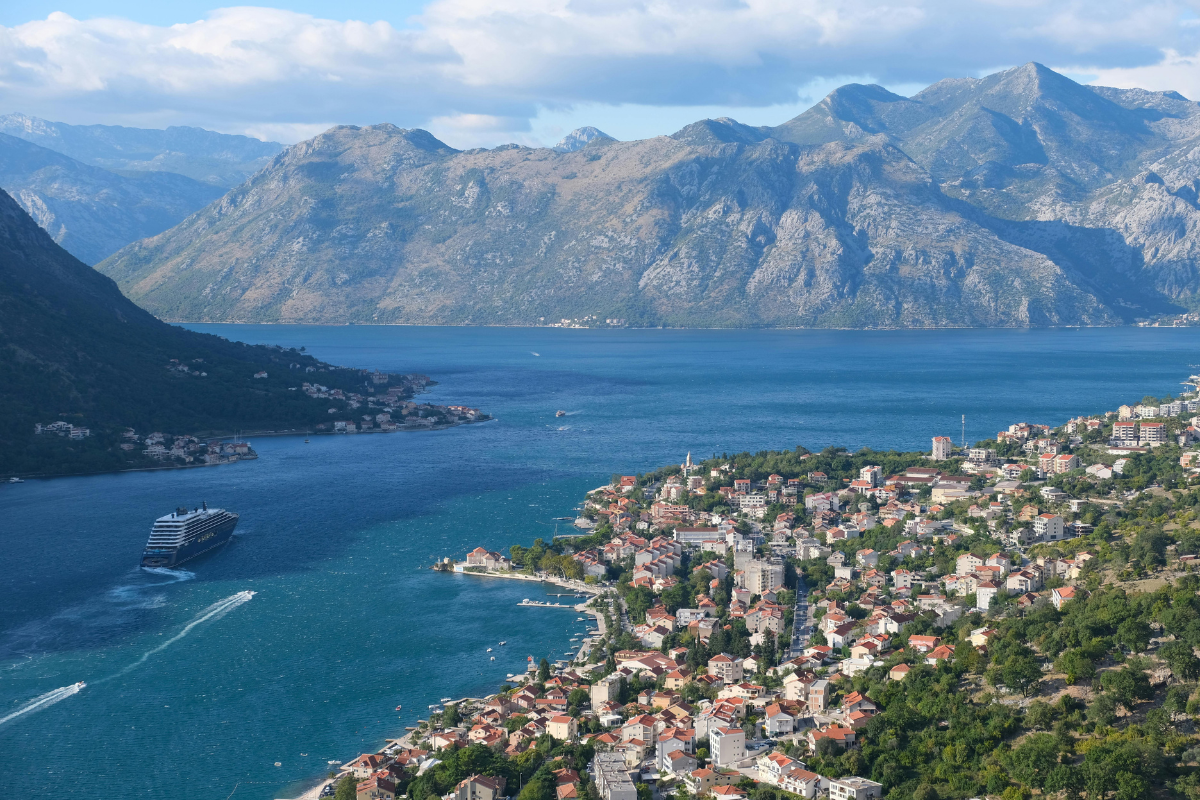
Stand anywhere along the Bay of Kotor and look up. That dark wall of rock rising almost straight out of the water, the one that makes the medieval town below look like a model village, is Lovćen. The whole country takes its name from it. Crna Gora, Montenegro, the black mountain, comes from the way these forested slopes look from a distance, dark against the sky.
Montenegrins don't talk about Lovćen the way you'd talk about a nice hiking spot. They call it their holy altar, and it appears in the national anthem. Right at the top, a poet-prince had himself buried so he could watch over the country forever, which tells you most of what you need to know about how the place sits in the national imagination.
For a visitor, all of that history sits on top of one very practical fact: Lovćen is one of the best drives in Europe, and the most rewarding way to reach it is behind the wheel. This guide covers both ways up the mountain, the new cable car and what it actually does and doesn't do, the mausoleum at the summit, the food village of Njeguški, and everything you need to plan the day properly.
Lovćen in Brief: What You're Actually Visiting
The park became protected in 1952 and is one of Montenegro's five national parks. It covers roughly 6,220 hectares of the central massif and sits across the Cetinje and Budva municipalities, behind and above the Bay of Kotor.
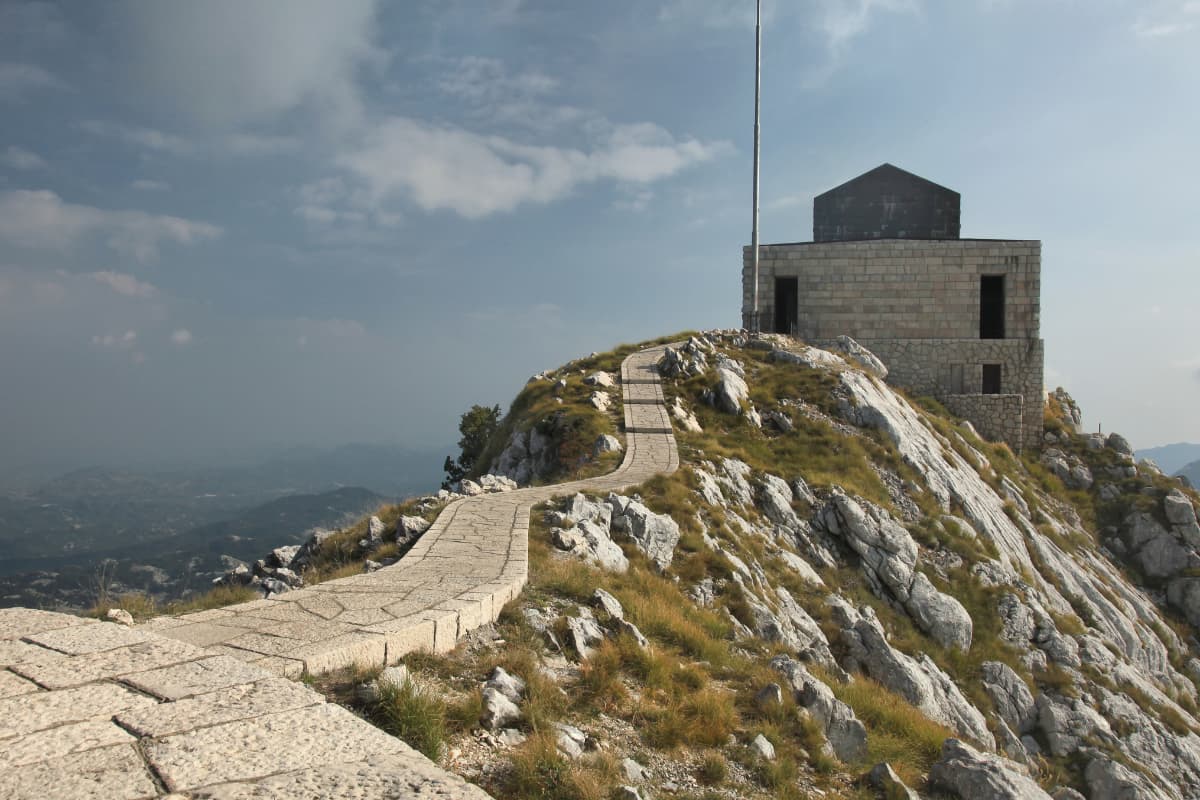
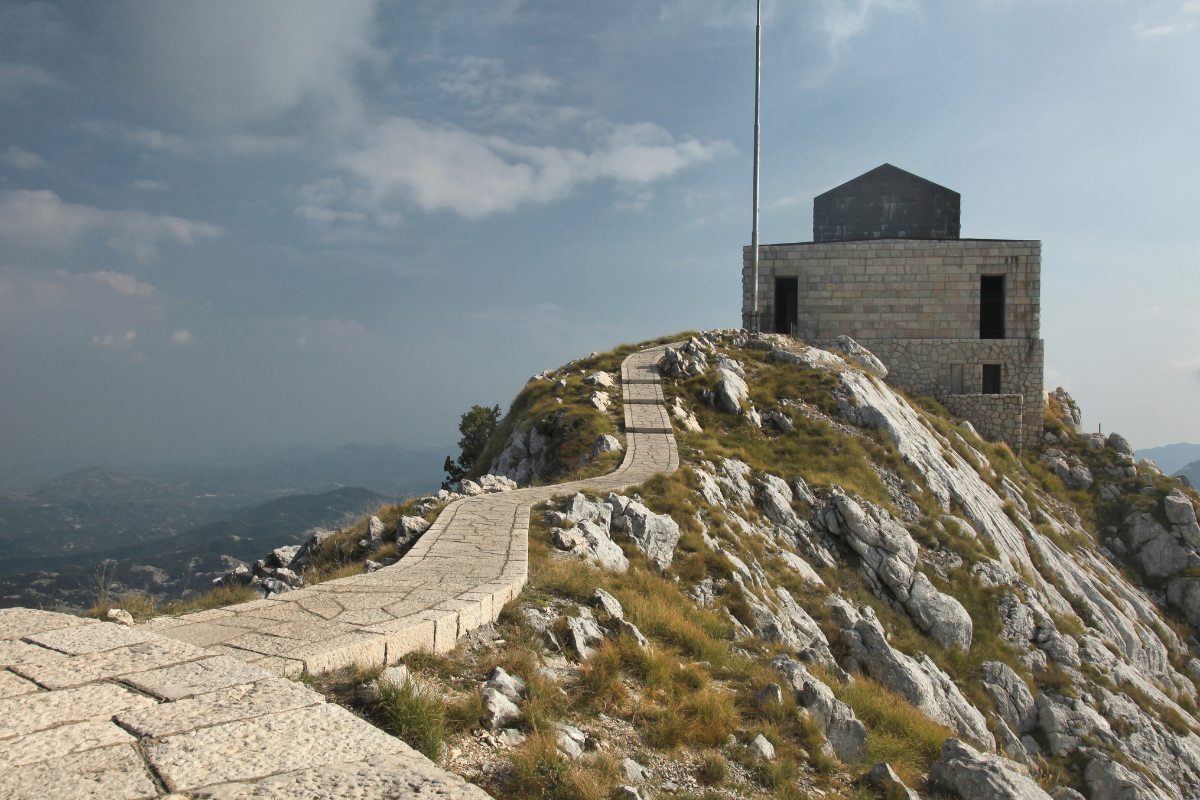
There are two summits that matter. Štirovnik is the higher of the two at 1,749 meters, but it carries a telecommunications tower and the top is closed to visitors. The one everybody actually goes to is Jezerski vrh, the second peak at 1,657 meters, because that's where the Njegoš Mausoleum stands. When people say they're going up Lovćen, they almost always mean Jezerski vrh.
A few things are worth knowing before you set off. The mountain runs roughly 10°C cooler than the coast, and the weather turns quickly up there, so the beach outfit you left Budva in won't be enough at the summit. The park sits where the Mediterranean and Continental climates meet, which is why it holds close to 2,000 plant species, said to be about a third of all the flora in Montenegro. Golden eagles ride the thermals overhead, and you might spot a fox, a wild boar, or a chamois on the quieter trails.
Getting to Lovćen by Car
Here's the part that matters most, because the route you choose shapes the entire day. There are two roads up, and they suit very different drivers.
The Kotor Serpentine: The Spectacular Way Up
This is the famous one. The old road from Kotor was finished in 1884 as a joint Montenegrin and Austro-Hungarian project, replacing what had until then been a mule track. It climbs the rock face above the bay in a tight stack of numbered switchbacks, usually counted as 25, with a stone wall on one side and a long drop on the other. Partway up you reach the Krstac pass, where the view back over the bay opens up completely. This is the stretch you've seen on car commercials and in every drone video of Montenegro, and it lives up to it.
It's also genuinely demanding, so a little honesty is in order before you commit to it.
A Few Honest Things to Know Before You Drive It
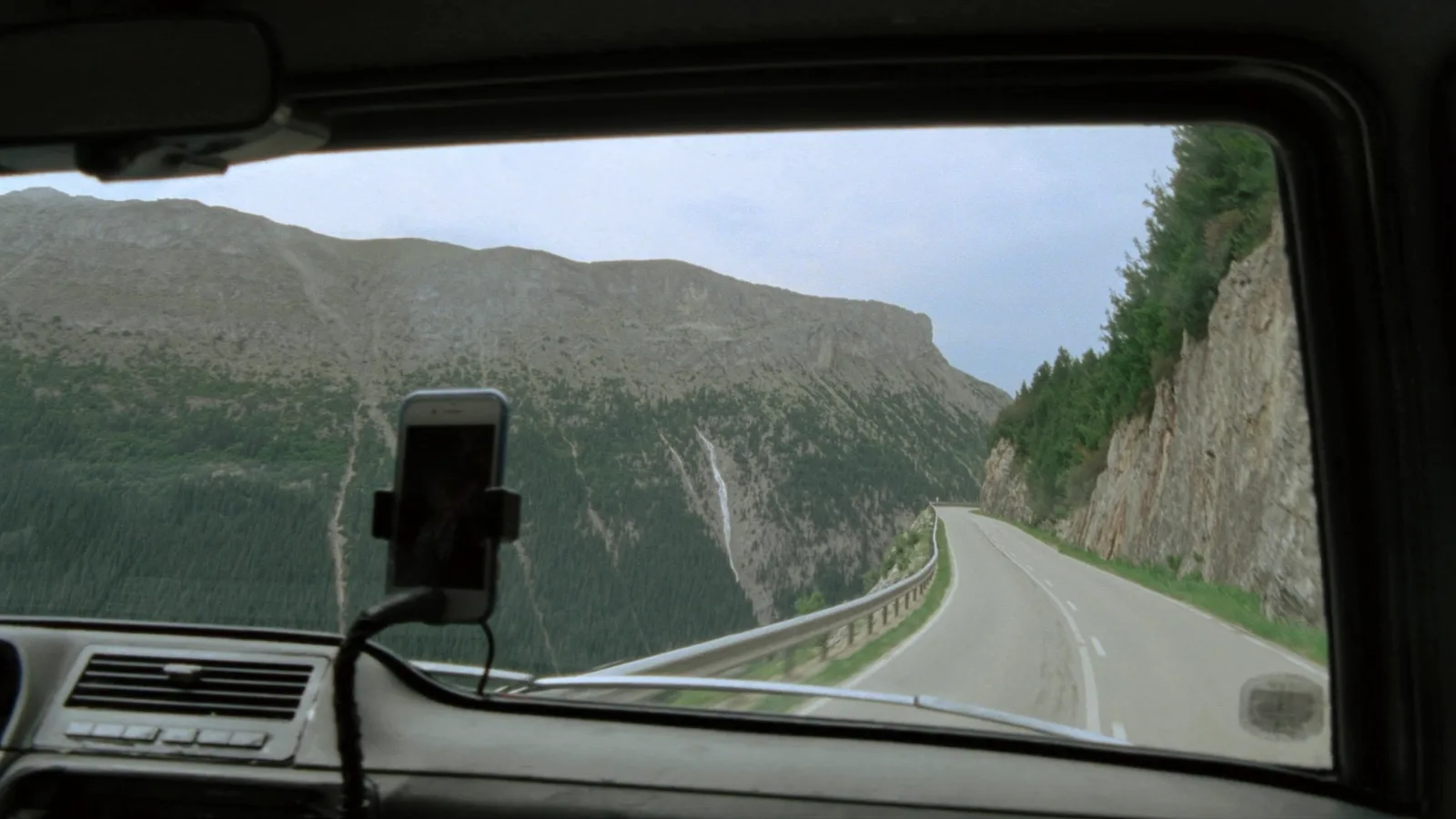
The road is paved and perfectly drivable, but it's narrow, and in places there's no guardrail between you and the edge. Tour buses use it too, and meeting one on a hairpin means somebody has to reverse. Keep it in a low gear on the way down to save your brakes, use the pull-offs to let faster locals past, and if low cloud is sitting on the ridge, know that visibility can drop to almost nothing within a couple of bends. If anyone in the car is badly prone to motion sickness, this is not the gentle option.
There's one more thing, and it's new for 2026, so it's worth planning around. The serpentine now runs on a one-way timetable in peak season. Traffic goes uphill from Kotor toward Njeguški roughly from 7:00 to 15:00, then it flips and traffic comes downhill from Njeguški back toward Kotor from about 15:00 to 19:00. Police are enforcing it and writing tickets, particularly around the Trojica junction at the bottom. In plain terms: if you want to drive up the serpentine, do it in the morning or early afternoon, and plan to come down it later in the day or descend a different way. These regimes get adjusted from season to season, so check the local signage before you go.
The Cetinje Approach: The Calm Way Up
If the serpentine sounds like more adventure than you want, there's a far more relaxed route. From Cetinje, Montenegro's old royal capital, a normal mountain road runs about 21 kilometers up through Ivanova Korita to the mausoleum car park. It's still a mountain drive with curves, but it's wider, two-way, calmer, and not subject to the serpentine's one-way clock. This is the route to take if you're nervous about exposure, driving a larger vehicle, or simply not in the mood to white-knuckle it. Anyone coming from Budva, Bečići, Podgorica, or the airport will arrive this way anyway.
The most satisfying plan, if you have the time, is to use both. Drive up the serpentine from Kotor in the morning for the bay views, then loop down the other side through Cetinje on the way home. More on that loop near the end.
Drive Times to the Mausoleum
Approximate driving times to the Jezerski vrh car park, which is where the steps to the mausoleum begin.
| From | Distance | Drive time | Route |
|---|---|---|---|
| Cetinje | ~21 km | 30 to 40 min | Via Ivanova Korita, the easiest approach |
| Kotor | ~45 km | ~1 hour | Serpentine via Njeguški, then the park road |
| Budva | ~50 km | ~1 hour | Via Cetinje and Ivanova Korita |
| Bečići | ~52 km | ~1 hour | Via Cetinje |
| Tivat | ~55 km | 1 to 1.5 hours | Serpentine via Kotor, or via Budva and Cetinje |
| Podgorica | ~65 km | ~1.5 hours | Via Cetinje |
Fill the tank before you head up. Stations are scarce on the mountain, and you don't want to be hunting for fuel at 1,600 meters.
The Kotor – Lovćen Cable Car: The No-Drive Alternative
Montenegro's newest headline attraction opened in the summer of 2023, and it changed how a lot of people reach the mountain. The Kotor-Lovćen cable car runs from the Dub lower station, just off the Budva to Tivat road and about 10 minutes from Kotor's Old Town, up to the Kuk station at 1,348 meters. The trip covers just under 4 kilometers in 11 minutes across 48 gondolas, with the whole bay opening up beneath you as you climb.
At the top there's a restaurant, a bar named for its altitude, an alpine coaster that lets you control your own speed down a winding track, and bike hire if you want to ride the park roads. Return tickets in 2026 run from roughly €20, more in peak summer and less in the shoulder season, with one-way fares from around €13. The cable car suspends in high wind, so it's always worth checking that it's actually running before you drive to the lower station.
Now the important caveat, because this trips people up. The cable car does not deliver you to the mausoleum. Kuk station is several kilometers from Jezerski vrh, so from the top you'd still need a taxi, a pre-arranged shuttle, or a decent hike to reach the tomb itself. For visitors who don't want to drive the serpentine and are happy with the views from Kuk, the cable car is a genuinely good option. But if your main goal is to stand at the mausoleum, having your own car remains the most direct and flexible way to do it, and it lets you fold in Njeguški and Cetinje on the same trip rather than being tied to gondola hours.
The Njegoš Mausoleum: The Reason Most People Come
Everything on Lovćen leads here. The mausoleum holds Petar II Petrović-Njegoš, born in 1813 and ruler of Montenegro from 1830 until his death in 1851. He was a prince-bishop, a reformer who organized the country's taxes and schools, and above all a poet whose epic Gorski vijenac, The Mountain Wreath, is still one of the cornerstones of South Slavic literature. He chose this peak as his own resting place.
Climbing the 461 Steps
From the car park, you reach the tomb by climbing 461 steps that run up through a tunnel bored straight through the rock of the summit. It's a short climb, 25 to 40 minutes at a relaxed pace, but you're doing it above 1,600 meters, so take it gently if the altitude makes itself felt. The car park is small and fills fast in summer, which often leaves people parking along the road below and walking up.
Inside the Mausoleum
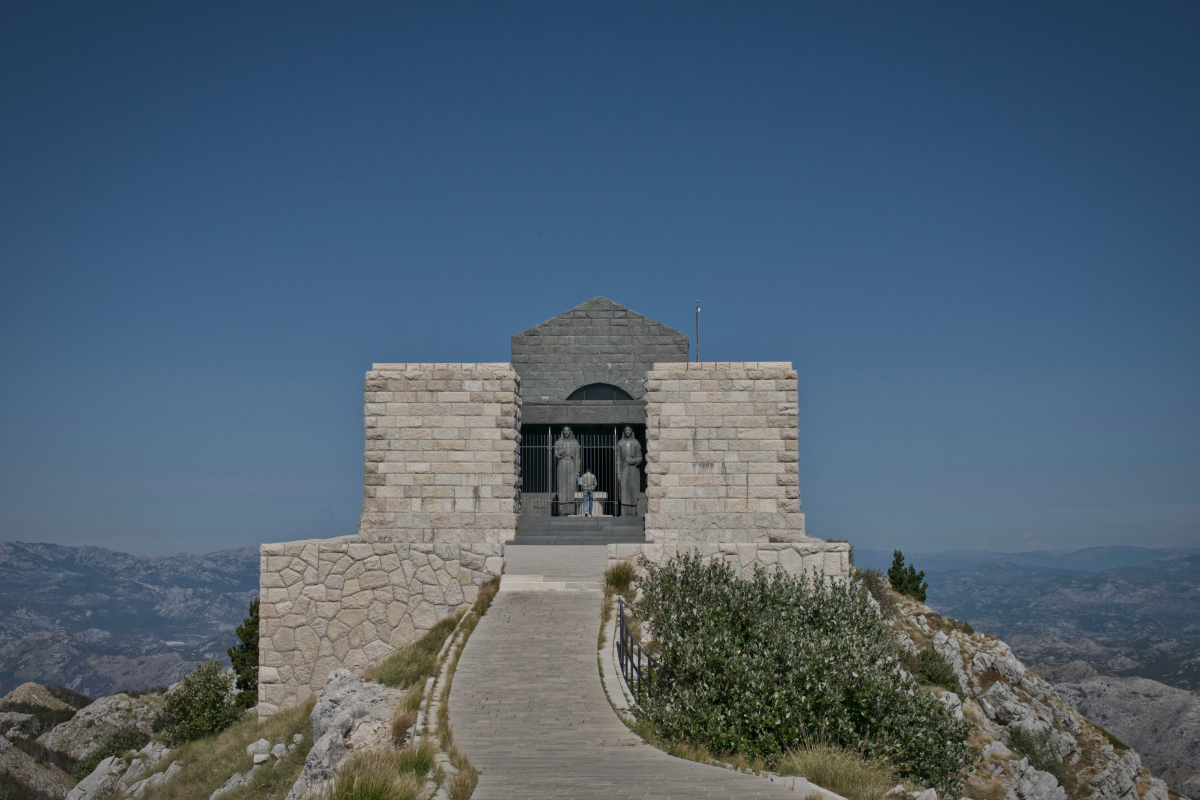
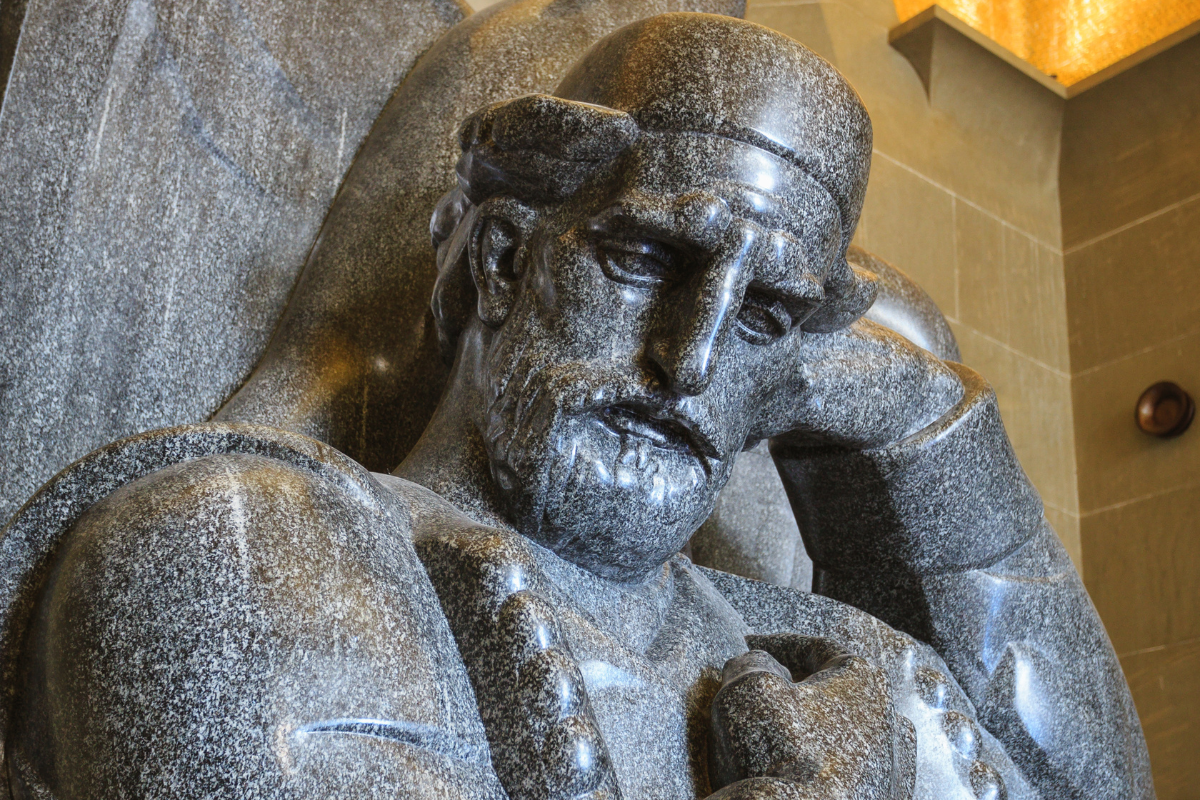
At the entrance, two large female figures carved in marble stand guard, dressed in traditional Montenegrin costume. Local tradition reads them as a mother and a daughter, though that interpretation is folklore rather than documented fact, and accounts of their exact weight vary from one source to the next. Past them, in the inner chamber, is the figure of Njegoš himself, cut from a single block of black granite, around 28 tonnes of it, seated with an open book and an eagle at his shoulder. Above him the ceiling is lined with a golden mosaic canopy, commonly described as more than 200,000 gold-leaf tiles, using close to 18 kilograms of gold. The actual tomb lies below in white marble.
The View From the Top
Walk around to the back of the mausoleum and you reach a circular stone platform, built in the shape of a traditional Montenegrin threshing floor, a guvno. From here the view runs in every direction: the Adriatic to the west, Skadar Lake and the Durmitor range inland, and on the clearest days, usually after autumn rain has scrubbed the haze out of the air, all the way to the mountains of Albania and the coast of Croatia and Italy. The line most often quoted up here, popularly attributed to George Bernard Shaw, describes the panorama as a sea of mountains. Nobody can quite confirm he said it, but standing there, you understand why it stuck.
A Short History Worth Knowing
The mausoleum you see today is not the original, and the story behind it adds real texture to the visit. Njegoš built a small chapel on this summit in 1845 and was buried there after his death. The chapel was damaged by Austro-Hungarian shelling in the First World War and rebuilt in 1925. Then, in the communist Yugoslav era, the authorities decided to replace it with a grand secular monument designed by the sculptor Ivan Meštrović, with the figure of Njegoš carved in Split. The chapel was demolished to make way for it, and the project was genuinely controversial at the time, opposed by the Serbian Orthodox Church and by a number of art historians. It was finished in 1974, and whatever the arguments around its creation, it has long since become one of the most visited places in the country.
Njeguški: Prosciutto, Cheese, and the Birthplace of a Dynasty
You pass through Njeguški on the serpentine route, and you should stop, because skipping it would be a mistake. This small village on the mountain plateau, with only a few dozen permanent residents, is the ancestral home of the Petrović-Njegoš dynasty that ruled Montenegro from 1696 to 1918, and the birthplace of Njegoš himself. His family home, the only two-storey house in the village, is now a small museum and holds a first edition of The Mountain Wreath, printed in Vienna in 1847.
The other reason to stop is the food. Njeguški is the home of two of Montenegro's most prized products: Njeguški pršut, a dry-cured ham smoked over beechwood, and Njeguški sir, the local cheese, often joined by kaštradina, air-dried mutton. Small family smokehouses line the road through the village, marked by hand-painted signs, and most will happily sit you down for a tasting. There's an old saying here that the ham should be sliced thin enough to see Lovćen through it. A plate of pršut, cheese, bread, and a glass of something local is one of the better lunches you'll have in the country, and it makes Njeguški a natural stop on the way to or from the summit. If you fall for the pršut and cheese, they travel well and turn up on plenty of souvenir lists from this region.
Beyond the Mausoleum: The Quiet Side of the Park
Most visitors do the mausoleum and leave, which means the rest of the park stays surprisingly peaceful. If you have a half-day to spare, it rewards the effort.
Ivanova Korita
This wooded basin, about 13 kilometers from Cetinje, is the recreational heart of the park. There's a visitor center where you can pick up trail maps and hire bikes, along with restaurants, picnic and barbecue areas, a children's playground, a treetop ropes course, and a handful of places to stay. One practical note: there are no shops up here, so buy any water and snacks in Cetinje before you climb. The air stays cool even in August, which makes it a genuine escape from the coastal heat and a good base if you're traveling with kids.
The Best Trails
The trails are well marked with red and white waymarks and run through beech forest, open meadow, and old shepherds' summer settlements.
The most popular is the Wolf Trail, an easy loop of about 7 kilometers from the Ivanova Korita visitor center, mostly shaded, with viewpoints along the way. For something longer, the Kuk circular runs roughly 14 kilometers and takes four to five hours through open grassland and past mountain springs, and it's the route to choose if you want a real hike without the mausoleum crowds. Stronger walkers can traverse the ridge between Jezerski vrh and Štirovnik, and the most committed make the full ascent from the Ladder of Kotor to the summit. Whatever you pick, start early in summer, because shade is limited above 1,500 meters and the sun is stronger than it feels in the mountain air.
Practical Information
| Item | Price | Notes |
|---|---|---|
| Park entry | €3 per person | Collected at the main gate |
| Mausoleum and viewing platform | €8 per person | Students and children pay roughly half |
| Parking | €1 per hour near the gate | Small free lot at the summit, fills fast |
| Njegoš birth house, Njeguški | ~€2 adult, ~€1 child | Separate ticket in the village |
The mausoleum is generally open from 9:00 to 17:00, with longer hours in high summer, and it runs seasonally, broadly mid-April to mid-November. Snow closes in on the upper ridge from late autumn, and the park stays open in winter, though the roads up may need chains, or at least good judgment. Because hours and prices do shift year to year, it's worth a quick check before you set out.
When to Visit
The shoulder seasons are the sweet spot. May and June, then September and October, give you mild weather, clear long-range views, and far fewer cars on the serpentine. Summer is perfectly good and pleasantly cool at the top, but the road and the small summit car park get busy, especially around midday when cruise traffic moves up from the coast. Aim to be at the summit early or late in the day, both for the light and for the space.
What to Bring
A layer warmer than you think you need, water, proper shoes if you plan to walk past the steps, and a little cash for the entry gates. And if you're new to driving here, a quick read on Montenegro's mountain roads before you go will make the whole day smoother.
Make a Full Day of It: The Classic Loop
The best way to see this part of Montenegro is to treat Lovćen as the centerpiece of a loop rather than a single out-and-back. Start in Kotor in the morning and climb the serpentine while it's running uphill. Stop at Krstac for the bay view, then pull into Njeguški for a pršut tasting. Carry on up to the mausoleum and the summit, then drop down the eastern side to Cetinje to wander its old streets. From there you're well placed to finish the day on the Budva Riviera or, if you still have daylight and appetite, to push on toward Lake Skadar, which you'll have been looking down on from the summit all afternoon.
That loop, Kotor to Njeguški to Lovćen to Cetinje and back toward the coast, packs a fjord-like bay, a sacred mountain, a royal town, and a food village into a single day, and none of it works nearly as well without your own car and the freedom to stop whenever something is worth stopping for.
There's a reason Njegoš asked to be buried up here rather than in any church or palace. From the summit you can see most of the country he spent his life trying to hold together, the coast on one side and the mountains rolling away on the other, and on a clear day the view genuinely reaches into three neighboring countries. It's the kind of place that reframes a whole trip. You arrive thinking of it as one more thing to tick off, and you leave understanding why an entire nation treats a mountain as something close to holy.
Get a car, fill the tank, pick your road up, and give yourself the whole day. Lovćen is not a quick photo stop. It's the best drive in Montenegro with one of the great views in Europe at the end of it, and it deserves to be done properly. When you're ready to plan it, we're here to help, whether or not the car is ours.
Exploring Montenegro by car?
Rent a reliable car with free CASCO, unlimited mileage, and delivery to your location.