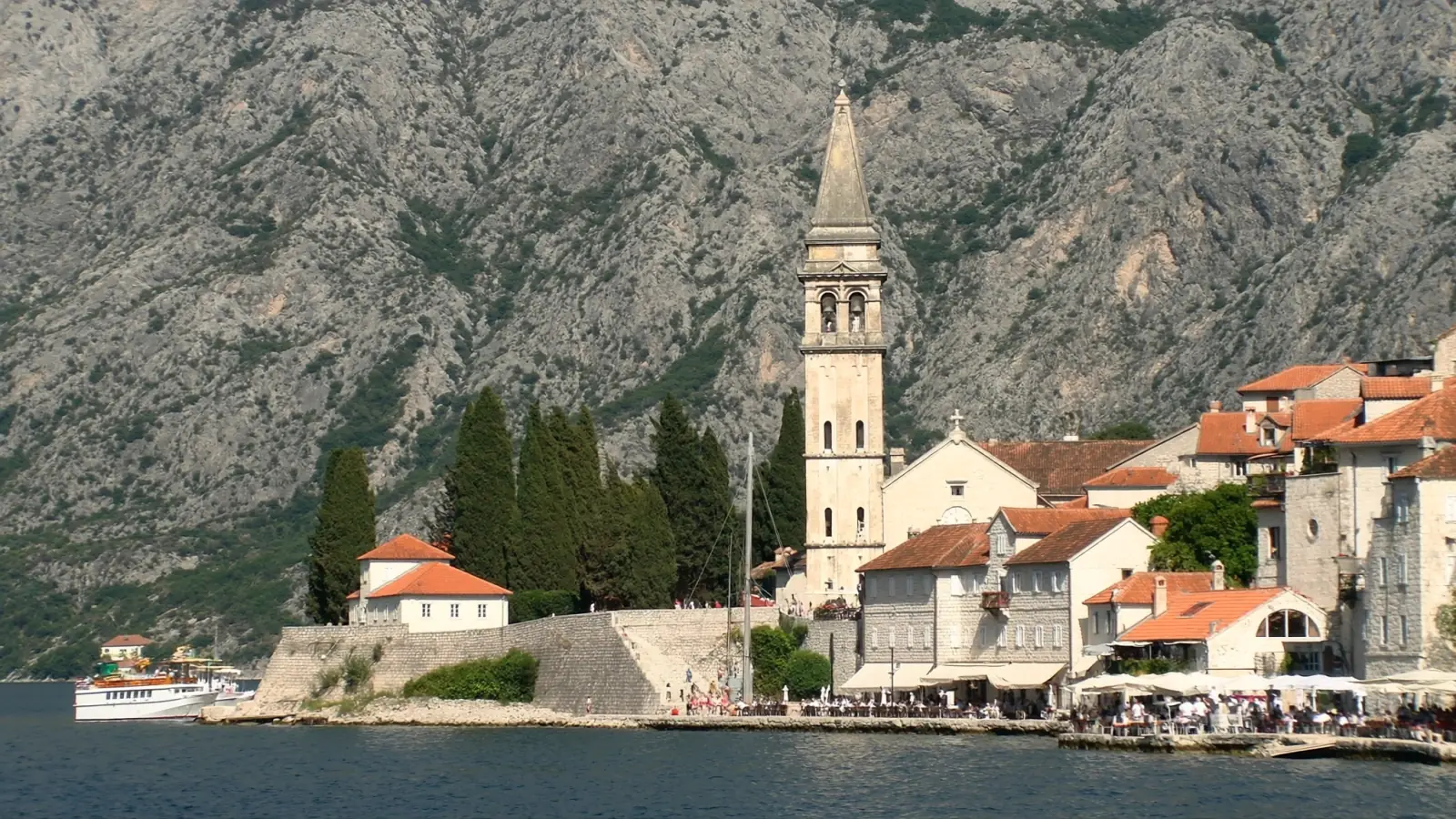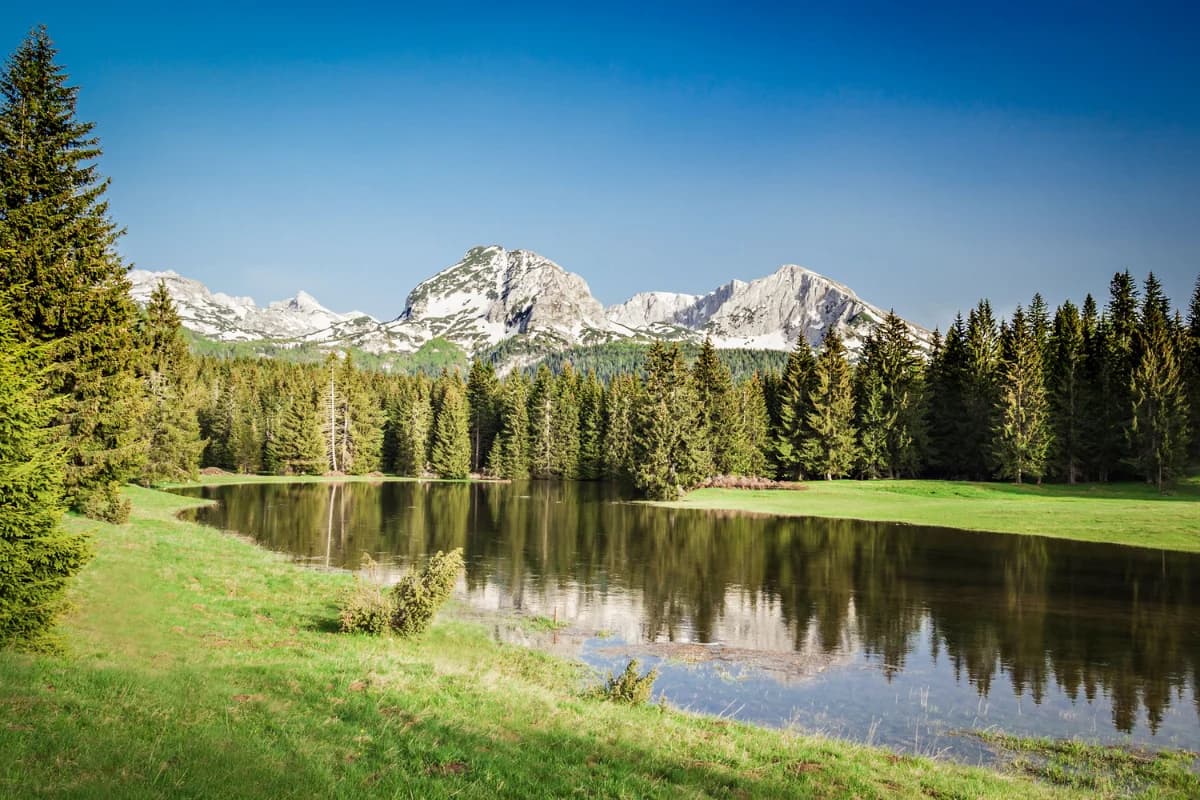
There's a small joke locals like to share with first-time visitors. They tell you the lake is called Black Lake, then they let you walk down to it. You round the corner, the trees clear, and you're staring at water that looks like someone melted an emerald into a mountain. Bright green in the morning, deep blue when the sun moves, sometimes a strange milky turquoise after rain. Anything but black.
The name actually comes from the wall of black pines that ring the shoreline. When the sun drops behind Međed peak in the late afternoon, the trees throw a shadow across the water and for about twenty minutes the lake earns its name. Then the light shifts again and the green comes back. Locals will tell you the lake changes its mind several times a day, and they're not exaggerating.
Crno Jezero, as it's known here, sits about 3 kilometers from the small mountain town of Žabljak in the heart of Durmitor National Park. It's a glacial lake, technically two of them: Veliko Jezero and Malo Jezero, connected by a narrow channel that often dries up in summer and turns them into separate bodies of water. The lake sits at 1,416 meters, surrounded by 400-year-old pines, and it's the most accessible of the 18 glacial lakes scattered across the Durmitor massif. Žabljak itself, at 1,456 meters, holds the title of highest town in the Balkans.
Most travel guides will tell you all of that and then leave you to figure out the actual logistics. This is the part where we do something different. Because if you're driving to Black Lake, the journey is half the experience, and there are a few things nobody seems to mention.
Getting There: Drive Times From Every Starting Point
Žabljak is remote. Not Patagonia remote, but enough that you should leave with a full tank and a loose schedule. Here's what to expect from the main starting points along the coast and beyond.
| Starting Point | Distance to Žabljak | Drive Time | Best Route |
|---|---|---|---|
| Budva / Bečići | ~190 km | 3 to 3.5 hours | Sozina tunnel → Podgorica → Mateševo highway → Mojkovac → Kolašin → Šavnik |
| Kotor | ~165 km | 3 to 3.5 hours | Risan → Nikšić → Šavnik (or coastal route via Budva) |
| Tivat Airport | ~180 km | 3.5 hours | Risan → Nikšić → Šavnik |
| Podgorica | ~140 km | 2 to 2.5 hours | Smokovac–Mateševo motorway → Kolašin → Šavnik |
| Nikšić | ~70 km | 1.5 hours | Šavnik route (shortest, but slowest road) |
| Sarajevo (Bosnia) | ~280 km | 5 to 6 hours | Foča → Šćepan Polje → Plužine → Žabljak |
| Belgrade (Serbia) | ~470 km | 7 to 8 hours | Užice → Pljevlja → Đurđevića Tara |
A few things you should know before you put any of this into Google Maps and trust it blindly.
The road from Mojkovac to Đurđevića Tara Bridge has been closed for over a year because of a major landslide near Sokolovine. The state has extended the deadline for reconstruction multiple times. Even if your map app suggests it as the fastest route, ignore it. The detour through Kolašin and Šavnik adds maybe 30 minutes and is the only safe option.
The Đurđevića Tara Bridge itself is currently under restoration. As of 2026, passenger cars are restricted from crossing during certain hours of the day. If you're coming from Pljevlja or Serbia, plan your crossing for early morning or the midday window. We'll come back to the bridge later because it deserves a stop on its own.
Two Routes, Two Different Trips
If you're coming from the coast, you have a real choice to make and most blogs gloss over it.
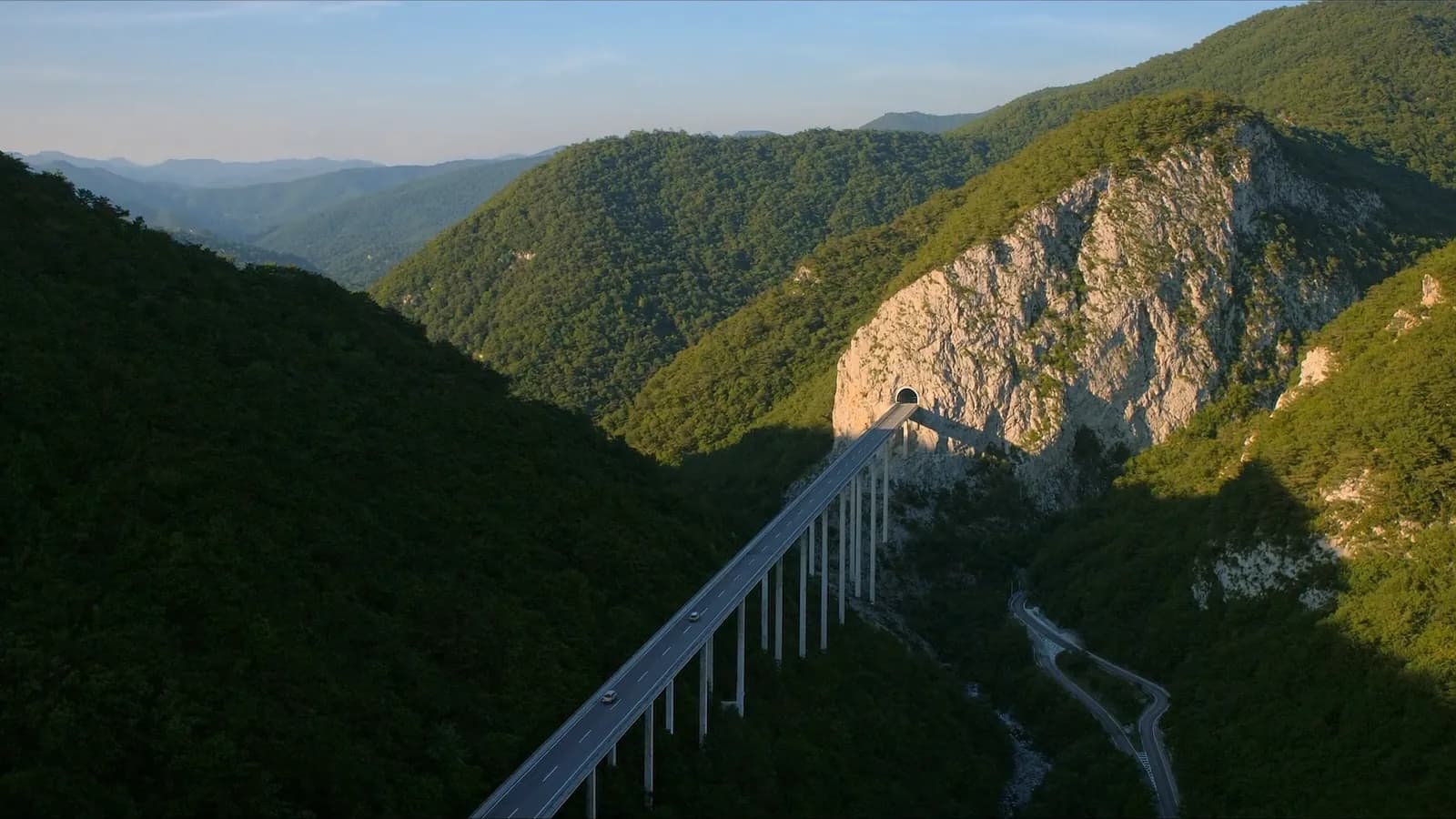
The first option is the new motorway. You drive to Podgorica, jump on the Smokovac–Mateševo highway, and then continue north through Mojkovac and Kolašin before turning west toward Šavnik and finally Žabljak. The motorway section is brilliant. It cut what used to be a brutal canyon drive down to about 40 minutes. The road is wide, well-marked, and there's a toll of around 3.5 euros for the tunnel section. Less stress, more predictable.
The second option is the old road through Nikšić. Shorter on paper at about 70 kilometers from Nikšić to Žabljak, but the section between Šavnik and Žabljak is a different story. Narrow, twisty, climbing through the Tušina valley with switchbacks that make passenger seats unhappy. In good summer weather it's a beautiful drive and you'll see things you never see from the highway. In winter, that same road can be partially closed after heavy snowfall, and even when open, it demands proper attention.
Our honest take: take the motorway route on the way up when you're tired from your flight or a long coastal day. Take the Šavnik road on the way back down when you have time and your camera is charged. You get both experiences, and you get the harder drive when you're warmed up.
One detail nobody mentions. The last reliable petrol station before Žabljak is in either Šavnik or Mojkovac, depending on your direction. Once you start the climb into the Durmitor plateau, fuel options get thin. Fill up before you commit to the mountain.
Parking and Tickets: The Stuff That Causes Confusion
Prices around Black Lake have a habit of changing depending on who you ask and when they last visited. Here's the current situation as of the 2026 season.
The entrance to Durmitor National Park costs 5 euros per adult, kids under 7 go free. You pay at the kiosk on the road approaching the lake. Hold onto your ticket because it covers the entire park for the whole day, so if you plan to drive the Durmitor Ring afterwards or visit other lakes, the same ticket gets you in.
Parking is separate, around 2 to 3 euros, and yes, it's cash only. There's no card machine, no Apple Pay, no apologies. Bring small bills.
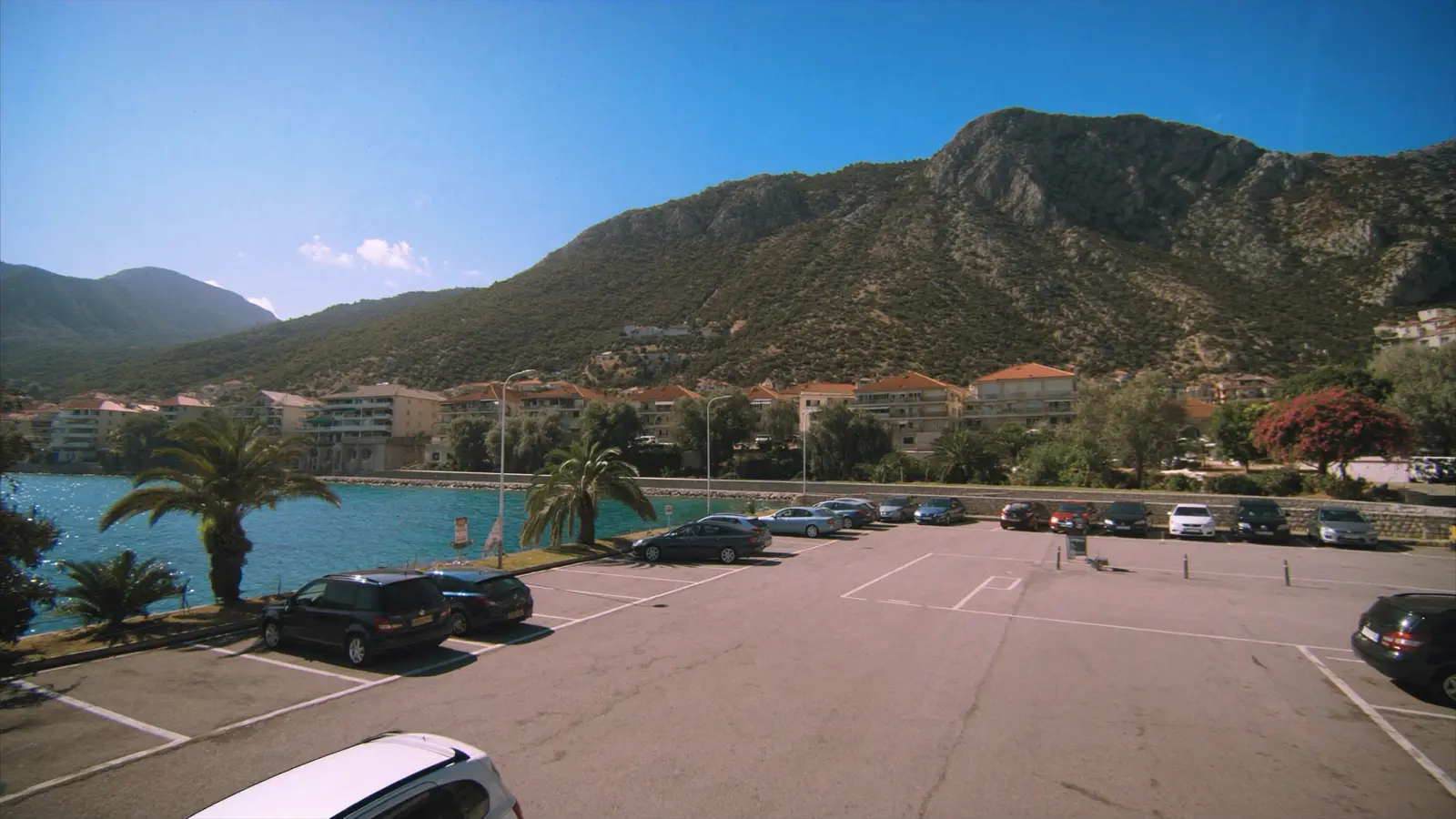
The main parking lot sits about 700 meters from the lake itself. From there, a wide tarmac path winds gently downhill through the pines until the water comes into view. It takes about 10 to 15 minutes to walk in, slightly longer if you stop at the wooden stalls along the way where local women sell forest honey, dried herbs, blueberry juice, and homemade rakija in old plastic bottles. The honey is genuinely good. The rakija will rearrange your face.
If you're traveling with very small kids, a stroller works fine on this initial path. The trail around the lake itself is a different story.
What to Actually Do When You Get There?
The classic move is the loop trail around the lake, which is just under 3.5 kilometers. Most guides will tell you it's an easy walk. That's true for the first half. The second half, particularly the section behind Malo Jezero, gets rocky, uneven, and includes a short stretch with a fixed rope where you need both hands. Doable for most people in trainers, but not the smooth tarmac stroll the marketing photos suggest. Plan for 60 to 90 minutes if you're moving steadily, two hours if you're stopping for photos and snacks. With kids under 6, you might want to walk halfway, find a quiet spot, and turn back.
You can rent a rowboat for around 10 euros an hour or a kayak for 4 to 6 euros depending on whether you want a single or double. The water is cold all year. In July and August it warms up enough that brave swimmers go in for short dips, but even then it never gets properly warm. There's no lifeguard, so use common sense.
The best photo angle isn't from the main viewpoint near the cafe. Walk about 15 minutes around the lake counterclockwise and you'll find a small clearing where Međed peak (2,287 meters) reflects perfectly in the water on calm mornings. Get there before 9 AM and you'll have it to yourself.
When to Go: The Honest Seasonal Breakdown
| Season | What You Get | What to Watch For |
|---|---|---|
| June to early July | Lakes joined as one body, deep emerald color, wildflowers in meadows | Some snow patches at higher altitudes, occasional rain |
| Late July to August | Peak season, warmest water, lakes often separated | Crowds before 11 AM and after 5 PM are manageable, midday is busy |
| September to mid-October | Gold and copper colors, thinning crowds, crisp air | Cold mornings, hotels start closing for the season |
| December to March | Frozen lake, snow-covered trail, surreal landscape | Limited access, winter tires mandatory, some routes closed |
| April to May | Snowmelt, high water levels, rushing streams | Trails muddy, parts of the loop sometimes impassable |
If you can swing it, go in the last two weeks of September. Locals call it the sweet spot. Tour buses are gone, the colors start turning, and the light is the kind photographers travel halfway across Europe for.
The Hippopotamus, the Hermit, and Other Žabljak Stories
Every region has its stories, and Žabljak has a good one about a man named Vukota who lived in a small wooden cabin near one of the higher Durmitor lakes for over thirty years. He raised sheep, refused electricity, and welcomed any hiker who passed by with hot tea and whatever cheese he had. When journalists from Belgrade came up to interview him in the 90s, he asked them to leave their phones in the car because, in his words, the mountain doesn't like noise. He passed away years ago, but old guides around Žabljak still mention him when the conversation turns quiet.
That's the spirit of this place. Stories outlive infrastructure here. You'll meet shepherds on the Durmitor Ring who've been making cheese the same way since the 1970s, and they'll wave you down to sell you a slab wrapped in paper for a few euros. The cheese might be the best you've had in your life. It might also have a small piece of pine bark in it. Both things can be true.
Pairing Black Lake With the Rest of Durmitor
Black Lake is the introduction, not the whole show. If you have the time, build a proper day or two around it.
The Đurđevića Tara Bridge sits about 25 minutes by car from Žabljak and frames the deepest river canyon in Europe. Even with the current restoration, the viewpoints on either side are open. Vražje jezero (Devil's Lake) is a quieter alternative to Black Lake, smaller and more turquoise, about 30 minutes by car. The full Durmitor Ring, an 85-kilometer loop, is a full-day commitment, and it's one of Montenegro's most spectacular drives when the weather cooperates.
For something quieter, drive to the Sedlo Pass, the highest paved road in Montenegro, on a clear evening. Bring a thermos and watch the light fade across the limestone peaks. It's free, it's silent, and you'll probably share it with three other cars at most.
Where to Eat and Sleep?
Žabljak has grown a lot in the last decade, and accommodation runs from rustic wooden chalets to modern hotels. Hotel Soa, Polar Star, and Rezident are reliable mid-range options. For something more local, look for guesthouses (apartmani) outside the town center where families rent out a few rooms with breakfast included. Prices are reasonable outside July and August, but in peak season everything books up two months ahead. Don't leave it to the night before.
Food in this part of Montenegro is mountain food and unapologetic about it. Order jagnjetina ispod sača (lamb slow-cooked under a metal bell with potatoes), kačamak (a creamy cornmeal and cheese dish that will fill you for the rest of the day), or durmitorska pastrmka (mountain trout). Restoran Crno Jezero, right at the lake itself, is touristy but the trout is genuinely good. In town, Ukus Durmitora and Or'O are both solid for traditional cooking.
What Kind of Car You Need?
For Black Lake itself and any of the main roads we've covered, a regular city car is completely fine. A Polo, Yaris, or any small rental car handles the tarmac to Žabljak without complaint. The parking lot at the lake is paved and standard.
You only need higher clearance if you plan to venture off the main loop into deeper Durmitor territory, like the Sušica canyon road or some of the more remote trail starting points. For 95 percent of visitors, that's not the trip you're taking. In winter, winter tires are legally mandatory from November 15 to April 1, and chains in the boot are strongly recommended for the higher sections.
One Last Thing
The weather here changes faster than you expect. We've seen people leave Bečići in 32-degree heat in August and arrive in Žabljak two and a half hours later wishing they'd packed a fleece. Even in July, evenings near the lake drop to single digits. Bring a layer. Bring cash. Bring a paper map or download the offline version, because mobile signal disappears in the canyons.
Then take your time. Black Lake doesn't ask you to rush, and the second you stop trying to optimize the visit, the place opens up. That's when you understand why the locals never quite get tired of it.
Exploring Montenegro by car?
Rent a reliable car with free CASCO, unlimited mileage, and delivery to your location.