There’s a local legend that Lake Skadar is really just a deep pool of tears. A fairy fell in love with a sailor, begged the heavens to make it happen, and got punished for her stubbornness. Struck blind. So she cried. For days, weeks, months. Her tears flowed around the hills and through the valleys until an entire lake took shape between the mountains of Montenegro and Albania.
It’s a great story. But honestly? When you first round the bend on the road from Podgorica and catch that initial glimpse of water stretching between jagged peaks, the real thing feels just as mythical.
Lake Skadar, or Skadarsko Jezero if you want to sound like you belong, is the largest lake in the Balkans. Depending on the season and rainfall, it covers anywhere between 370 and 530 square kilometers. To put that in perspective, it’s bigger than Malta. About two-thirds of it sits in Montenegro, and the remaining third spills into Albania. The Montenegrin side has been a protected national park since 1983, and it’s one of Europe’s most important bird reserves, home to around 270 species, including some of the continent’s last remaining colonies of Dalmatian pelicans.
If you look at it from above, the lake is shaped like a dolphin. The tail and most of the body are in Montenegro, while the head pokes into Albania. Millions of years ago, this was actually a bay of the Adriatic Sea. Tectonic shifts, volcanic activity, and changing sea levels cut it off over time, and what remained was this enormous freshwater lake fed by the Morača River and drained into the Adriatic by the Bojana.
And yet, most tourists in Montenegro skip it entirely, too busy chasing Instagram shots in Kotor or sunbathing in Budva. Their loss, honestly.
This guide is specifically for people exploring Lake Skadar by car, which is by far the best way to do it. We’ll cover three scenic driving routes, the stops you shouldn’t miss, where to park without losing your mind, and how to plan your time whether you’ve got half a day or a full weekend.
Why a Car Is the Only Way to Properly See Lake Skadar
Let’s get this out of the way. Yes, you can visit Lake Skadar by bus, by train, or on an organized day trip from Kotor. You’ll roll into Virpazar, get on a boat for two hours, maybe drink a glass of wine at the dock, and head back. It’s fine. It’s a perfectly okay experience.
But Lake Skadar isn’t a single-attraction kind of place. The magic is in the tiny fishing villages that don’t appear on most maps. The winding roads with no guardrails where you white-knuckle the steering wheel and then suddenly a viewpoint opens up that makes you forget how to breathe. The family winery where a guy pours you his grandmother’s Vranac recipe and insists you try the homemade rakija even though it’s 11 AM.
None of that happens on a group tour.
With a car, you control the tempo. You can stop at unmarked viewpoints, take detours down dead-end roads to villages like Karuč and Dodoši where time genuinely seems to have stopped, and arrive at the famous Pavlova Strana viewpoint at sunset instead of during peak midday chaos.
Rental cars in Montenegro are affordable. You can often find deals for around €45 per day, especially if you book through local agencies. Just make sure you’re comfortable with narrow, winding mountain roads, because there will be plenty of those.
Getting to Lake Skadar: Drive Times and Routes
The main gateway to Lake Skadar is the small town of Virpazar, which sits right on the lakeshore. Here’s roughly how long it takes to get there from the main starting points.
| Starting Point | Distance to Virpazar | Estimated Drive Time | Route | Notes |
| Podgorica | ~25 km | 20 to 30 min | E80 direct | Quickest option. Almost a straight shot through the valley. |
| Podgorica (scenic) | ~40 km | 45 to 60 min | M2.3 via Rijeka Crnojevića | Longer but far more beautiful. Mountain views and lake panoramas the whole way. |
| Budva | ~50 km | ~1 hour | E80 via Sozina tunnel | Straightforward once you pass through the tunnel. |
| Kotor | ~65 km | 1.5 to 2+ hours | Coastal road then E80 | The Kotor to Budva stretch is a nightmare in summer. Two lanes, endless traffic. Leave early. |
| Bar | ~35 km | 30 to 40 min | E80 north | Underrated starting point if you’re combining the lake with the southern coast. |
| Tivat airport | ~75 km | 1.5 to 2 hours | Coastal road then E80 | Lake Skadar will likely be the second or third stop on your trip, not the first. |
One important note about the two routes from Podgorica. The E80 takes you directly to Virpazar. Fast, efficient, no drama. But the M2.3 road, which branches off toward Rijeka Crnojevića, is the scenic route. It takes longer but passes through mountains with lake views that will have your passengers glued to the windows. If you’re not in a rush, take the M2.3. You won’t regret it.
Three Scenic Driving Routes Around Lake Skadar
Rather than just listing attractions, here are three distinct driving routes you can mix and match depending on your time and appetite for adventure.
Route 1: The Northern Panoramic (Virpazar → Rijeka Crnojevića → Pavlova Strana)
| Distance | ~30 km one way |
| Drive time | 45 min without stops, plan 2 to 3 hours with stops |
| Road conditions | Paved but narrow, some sections without guardrails |
| Best for | First-time visitors, photographers, wine lovers |
This is the classic Lake Skadar drive and the one most people will do. Starting from Virpazar, you head north along a road that hugs the lakeshore, gradually climbing into the hills. The views build slowly. First the lake on your left through gaps in the trees, then wider panoramas as you gain altitude.
About 30 minutes in, you’ll hit Café Macalov Brijeg, a roadside spot with a handful of outdoor tables and a killer view of the lake. Nothing fancy, just the right kind of place for a strong coffee and a first “are we really here?” moment.
The road then drops into Rijeka Crnojevića, a sleepy village with a population of a few hundred that was, believe it or not, once the capital of Montenegro. Back in the 1470s, when ruler Ivan Crnojević lost his original capital Žabljak Crnojevića to the Ottoman Turks, he moved his court to this village tucked into the green folds of the mountains along the river. The first printing press in the Balkans was set up nearby, making this tiny place a surprisingly significant chapter in the region’s history. Today, the old stone arch bridge is the main photo spot, and there are a couple of restaurants along the river where you can eat fresh fish with your feet practically dangling over the water.
From Rijeka Crnojevića, continue east and you’ll arrive at Pavlova Strana, the viewpoint you’ve probably already seen in every Montenegro travel article ever written. It overlooks a horseshoe bend in the Crnojevića River as it winds around a perfectly green hill before flowing into the lake. People call it Montenegro’s Horseshoe Bend, and for once the comparison actually holds up. The view genuinely looks like someone went overboard with Photoshop, but it’s all real.
Practical tip: park at the renovated hotel and restaurant near the viewpoint. There’s a viewing platform, but for better photos, walk a few hundred meters up the road where the angle improves and the fence doesn’t block your shot. Early morning and late afternoon light is best. Midday in summer it gets crowded and the light is too harsh.
If you want to extend this route, you can continue past Pavlova Strana toward the Podgorica to Cetinje highway, which connects nicely with a visit to Lipa Cave, a karstic cave system with guided tours running from April through November. The trio of Rijeka Crnojevića, Pavlova Strana, and Lipa Cave makes for one of the best day trips in Montenegro, and all three are within 30 minutes of each other.
Route 2: The Southern Shore (Virpazar → Godinje → Murići → Albanian Border)
| Distance | ~40 km one way to the border area |
| Drive time | 1 hour without stops, plan 2 to 3 hours with stops |
| Road conditions | Gets rougher heading south, narrow with potholes in places |
| Best for | Swimmers, adventurous travelers, off-the-beaten-path seekers |
This is the route most visitors never take, and it’s the one that will surprise you the most.
Leaving Virpazar heading south, the road climbs steeply through hills and past several viewpoints that rival Pavlova Strana but have zero crowds. The Lake Skadar Viewpoint and Godinje Viewpoint are both worth pulling over for.
Godinje itself is a partly abandoned hilltop village with stone houses, old wine cellars, and an atmosphere that feels frozen somewhere around the 18th century. Wander through the narrow paths between crumbling walls and you’ll likely have the place entirely to yourself. Some of the old cellars still produce wine. Just ask around.
Continue along the P16 and the road threads through a string of tiny communities, each one more remote than the last. The vibe shifts noticeably here. The southern shore has a distinctly different character. Many of the villages are ethnically Albanian, with mosques alongside the stone houses, and locals selling honey and homemade red wine by the roadside. The wine is served cold, which sounds wrong until you try it in 38-degree heat and suddenly it becomes the most logical thing in the world.
The highlight of this route is Murići, home to the only sand beach on Lake Skadar. After hours of mountain driving, the sight of a sandy strip with clear freshwater and mountains rising all around feels almost tropical. There’s a small campsite and restaurant here, and hiking trails fan out into the surrounding hills. It’s the kind of place where you tell yourself you’ll stay for an hour and end up spending the whole afternoon.
The road continues toward the Albanian border, and if you’re feeling adventurous, you can cross into Albania and continue to Shkodër on the other side of the lake. Take the southwestern route. The northeastern alternative runs through flat, swampy terrain with barely any lake views and isn’t worth the drive.
Plan about two hours from Virpazar to the border area, more if you want to swim, eat, or linger. And you will want to linger.
Route 3: The Adventurer’s Detour (Karuč and Dodoši)
| Distance | ~10 km off the main road (dead-end, you return the same way) |
| Drive time | 20 min each way |
| Road conditions | Narrow, potholed, no guardrails, exposed cliff edges |
| Best for | Experienced drivers looking for the most authentic, untouched experience |
This one isn’t for everyone, and that’s exactly the point.
Branching off from the road between Rijeka Crnojevića and the Podgorica highway, near the village of Rvaši, a narrow road runs high above the lake toward two fishing villages: Karuč and Dodoši.
Both are dead-end roads, meaning you drive in and drive back the same way. Karuč is the more accessible of the two. A cluster of stone houses on a small peninsula jutting into the lake, with a handful of residents who still fish for a living. It’s genuinely picturesque, but not in a polished, touristy way. More in a “this place has looked exactly like this for centuries” way.
Dodoši is even more remote. The road is rougher, the village is smaller, and you might be the only visitor there that entire week.
The reason to come here isn’t a specific attraction. It’s the feeling. These places haven’t been dressed up for tourists. No gift shops, no ticket booths, no signs pointing to the best selfie spot. Just old stone, quiet water, and mountains.
A word of honest warning. If the road conditions make you uncomfortable at any point, turn around. There’s no shame in it. The roads here are genuinely narrow with steep drop-offs and barely any room for two cars to pass. Drive slowly, use your horn on blind corners, and avoid coming here in a large vehicle.
Comparison of Routes at a Glance
| Route 1: Northern Panoramic | Route 2: Southern Shore | Route 3: Karuč & Dodoši | |
| Difficulty | Easy to moderate | Moderate | Challenging |
| Time needed | 2 to 3 hours | 2 to 3 hours | 1 to 1.5 hours |
| Crowds | Moderate at Pavlova Strana | Very few | Almost none |
| Key highlights | Rijeka Crnojevića, Pavlova Strana, cafés, Lipa Cave | Godinje village, Murići beach, Albanian border | Karuč fishing village, Dodoši |
| Swimming spots | Limited | Yes (Murići beach) | Possible but no formal beaches |
| Wineries along the way | Several between Virpazar and Boljevići | A few in Godinje area | None |
| Suitable for nervous drivers? | Yes | Mostly yes, gets tighter toward the south | No |
The Parking Situation in Virpazar (Read This Before You Go)
Virpazar parking deserves its own section because it has caused genuine stress for plenty of visitors, and the travel blogs aren’t exaggerating.
Here’s the deal. There is almost no parking in the village center itself. The streets are narrow, and in summer it gets chaotic fast. The smart move is to park in the large free gravel lot on the E80 main road, just before the turnoff into the village. There’s a pedestrian underpass that takes you safely across the road and under the train tracks into town. It’s a 3 to 5 minute walk. No stress.
Do not try to drive into the village center unless you have a confirmed parking spot at your accommodation. You’ll end up doing a painful multi-point turn on a one-lane bridge while a tour bus waits behind you. Trust me on this one.
The other thing to know. The moment you park and start walking toward the lake, you will be approached by guys offering boat tours. They’re enthusiastic. Very enthusiastic. They’re independent operators, not part of any official tourism board, and prices can vary quite a lot. A polite “we already booked, thanks” works as a brush-off even if you haven’t actually decided yet. Then take five minutes to walk around, check prices at the Kingfisher information desk by the water or the travel agency across the bridge, and compare before committing.
Wine, Rakija, and Eating Your Way Around the Lake
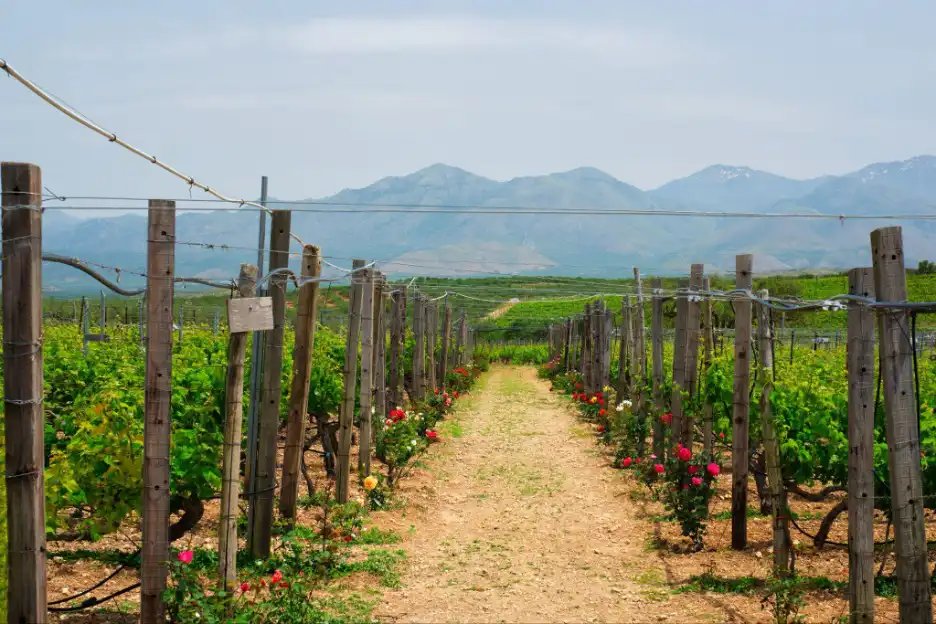
You can’t write about Lake Skadar without talking about wine, because the lake’s slopes happen to be Montenegro’s most important wine region. The area around the lake, particularly the Crmnica valley, has been producing wine since the Roman period. When Montenegro’s prince Nikola Petrović returned from his education in Paris in the mid-19th century, he was so struck by the potential of the local terroir that he issued a royal decree: every soldier from a vine-growing area had to plant 200 grapevines. That kicked off a new era for Montenegrin wine, and by 1907, Montenegrin Vranac won first prize at the London Wine Fair.
The star grape is Vranac, a local red variety that produces medium to full-bodied wines with dark fruit notes. The name literally means “black stallion,” and it accounts for about 70% of Montenegro’s wines. The white equivalent is Krstač, which is rarer and makes for elegant, aromatic whites. And then there’s rakija, grape brandy that’s essentially the national drink across the entire Balkans. It’s potent. Pace yourself, especially if your host keeps refilling your glass. They will.
The area between Virpazar and Boljevići is dotted with small, family-run wineries where you can do tastings. Most of them pair wine with local cheeses, pršut (their version of prosciutto), olives, homemade bread, and whatever fruit happens to be in season. The figs in particular are absurdly good. Sweet in a way that makes supermarket figs back home taste like cardboard.
For something completely different, make a detour to the Šipčanik Wine Cellar near Podgorica. The backstory is wild. During the Cold War, the Yugoslav army built a secret underground aircraft hangar inside a hill. A 356-meter-long tunnel where fighter jets were hidden from view. In April 1999, during the NATO bombing campaign, a bomb hit the entrance while planes were lined up for takeoff. The explosion chain-reacted down the line and destroyed all 26 aircraft in about an hour. Locals remember it as something like an earthquake.
After Montenegro became independent in 2006, someone made the inspired decision that the country needed wine more than it needed a ruined military base. Plantaže, Montenegro’s largest winery, took over the tunnel in 2007 and turned it into one of Europe’s most unusual wine cellars. Today it stores over two million liters of wine, aging in oak barrels at a constant 17 to 19°C. You can book a tour and tasting. It’s about 10 km from central Podgorica.
And here’s a dinner party fact: DNA analysis in 2004 revealed that Montenegro’s Kratošija grape variety is genetically almost identical to California’s Zinfandel. The evidence suggests the famous American grape actually originated here, not in Croatia as was previously believed. So next time you’re drinking Zinfandel, you’re drinking something with Montenegrin roots.
How Long Do You Actually Need?
| Time Available | What You Can Fit In | Will It Feel Rushed? |
| Half a day (4 to 5 hours) | Drive to Virpazar, 2-hour boat tour, Pavlova Strana viewpoint | Yes, but still worth it. Arrive before 10 AM or after 3 PM to dodge the crowds. |
| One full day | Route 1 in the morning, lunch at Rijeka Crnojevića, boat tour or kayak in the afternoon, winery visit before sunset | Just right for a solid taste of the lake. |
| Two days | Day 1: Northern route, boat tour, wine tasting. Day 2: Southern shore, swim at Murići, Karuč detour, early morning birdwatching. | The sweet spot. Stay overnight near the lake instead of commuting from the coast. |
| Three days | Everything above plus Lipa Cave, more wineries, cycling trails, Šipčanik cellar detour, crossing into Albania | You’ll leave feeling like you actually know the place. |
Where to Stay
Virpazar is the most practical base. It’s where the boats leave from, it has restaurants and a small supermarket, and it’s right off the main road. The downside is that it’s the busiest spot on the lake, especially during the day when tour groups descend.
For something quieter, consider staying in or near Rijeka Crnojevića. Guesthouses here tend to be more intimate and you wake up to birdsong instead of tour boat engines. The Estate and Winery San Duyevo near Rijeka Crnojevića is a standout for wine lovers. You’re literally sleeping in a vineyard.
There are also eco villas and guesthouses scattered in the hills above the lake. Eco Villas Merak, about 5 minutes by car from Virpazar, gets consistently great reviews for its pool, green surroundings, and genuinely welcoming owners.
If you’re continuing south toward Albania, Murići has a small campsite right by the beach. Perfect if you’d rather fall asleep listening to lake water than restaurant chatter.
One thing to keep in mind: accommodation options around Lake Skadar are limited compared to the coast. In summer, things book up fast. Don’t leave it to the last minute.
One Last Thing
There’s a story about Lake Skadar that perfectly captures the spirit of this place. In January 2010, heavy floods hit the area and the water level rose dramatically. A private zoo near the village of Plavnica was completely submerged, and Nikica, an 11-year-old pet hippopotamus weighing about two tonnes, bobbed to the top of her enclosure and simply swam away. For days, she wandered the surrounding villages with a pair of armed security guards trying to keep up with her. A local farmer named Nikola Radović walked out one morning to feed his cow and found a hippopotamus standing in front of the stall. “I thought I was losing my mind,” he told a local newspaper.
The floods came again later that same year and Nikica escaped a second time. Locals in nearby villages spotted her resting under a cherry tree on someone’s lawn, completely unbothered by the chaos around her.
It’s the kind of thing that could only happen at Lake Skadar. A place where the unexpected is always just around the next bend. Nikica has since passed away, so there are no hippos waiting on the road anymore. But the spirit of the place hasn’t changed one bit. Wild, surprising, and completely unlike anywhere else in Europe.
Get in the car. Take the slow road. Stop when something catches your eye. Lake Skadar rewards the curious.