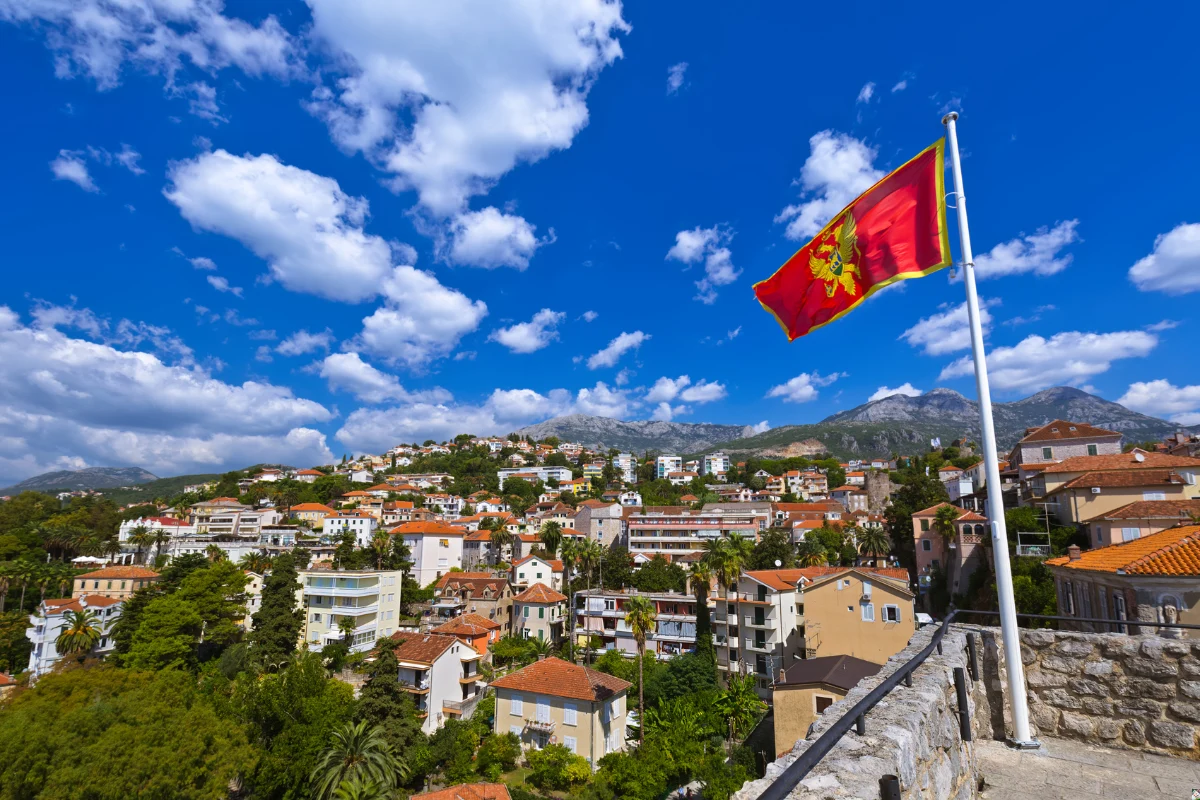
Most visitors come to Montenegro for the stunning Adriatic coast, with its turquoise waters and sunny beaches. However, some of the country’s most breathtaking scenery isn’t by the sea at all.
Durmitor Mountain, in northwest Montenegro, offers such a dramatic change in scenery that it feels like entering a different country. Just a few hours’ drive from Budva’s beaches or Kotor’s old town, the warm Mediterranean air turns fresh and alpine. The coast fades into the background, with mountain ridges, deep gorges, and dense pine forests in the foreground. This is a rare place where nature hasn’t been polished for tourists it’s raw and powerful, waiting to be explored.
A UNESCO treasure hiding in plain sight
Durmitor was declared a national park in 1952 and received UNESCO World Heritage status in 1980, making it one of the oldest protected areas in the region. Part of the Dinaric Alps, the massif contains 49 peaks above 2,000 meters, with Bobotov Kuk standing as the highest at 2,523 meters. Still, beyond these statistics lies something even more special.
What makes Durmitor special is the feeling you get when you arrive. The silence here is hard to put into words not the awkward quiet of an empty room, but a peaceful stillness that makes you want to sit on a rock and just breathe. The air feels crisper, the colors brighter, and the sky seems closer than it does by the coast.
The massif is dotted with 18 glacial lakes that locals call mountain eyes a name that feels just right when you see them. The biggest and most famous is Crno Jezero, or Black Lake, with dark emerald water surrounded by tall pines and the towering Međed Peak. It’s about a 30-minute walk from Žabljak, the small mountain town that’s the gateway to the park. The easy 3.5-kilometer loop around the lake is perfect for families, couples, or anyone wanting a peaceful spot to relax and read by the water.
Still, there’s much more to Durmitor than just Black Lake. Focusing only on this highlight would mean missing the wider adventure and beauty the region has to offer.
The Tara River Canyon – Europe’s deepest gorge
If you have ever heard of Durmitor, there is a good chance it was because of the Tara River Canyon. Stretching over 80 kilometers and reaching a depth of 1,300 meters, the canyon is the deepest in Europe and the second deepest worldwide, after the Grand Canyon. The Tara River itself, known locally as “the Tear of Europe,” flows through the gorge with water so clean that you can drink directly from it in many places.
The Đurđevića Tara Bridge, a striking concrete arch built in 1940, crosses the canyon about 170 meters above the river. It’s one of the most photographed spots in Montenegro. Standing on the bridge, looking down at the turquoise river winding below between lush canyon walls, is an experience that truly takes your breath away.
For those seeking adventure, white-water rafting on the Tara River is Montenegro’s top outdoor activity. The rapids range from gentle sections perfect for beginners to tougher sections in spring, when snowmelt swells the river. Rafting tours run from a few hours to a full day, with chances to swim in side streams and take in the canyon from the water.
Zip-lining across the canyon near the Đurđevića Bridge is another option for those who want their adrenaline served in a quick, intense burst.
Exploring the Durmitor Ring Road
A great way to see Durmitor’s vastness and variety is to drive the Durmitor Ring Road, a 76-kilometer loop that starts and ends in Žabljak. The road twists through high mountain passes, dips into valleys, passes remote villages, and offers changing panoramic views at every turn.
The Sedlo Pass, the highest paved road in Montenegro, is a highlight of the route. From here, on a clear day, the views stretch across a seemingly endless expanse of peaks and ridges that make you feel as if you are standing on the roof of the Balka. A few tips for this drive: The road is mostly paved but can be narrow in spots. Some steep sections demand your full focus. Driving the whole loop without stopping takes about four to five hours. But you’ll probably want to stop often. Almost every turn brings a new view. You might spot a glacial lake, or a small group of traditional mountain huts where locals still make cheese and dry meat.
One stop many visitors miss is Vražje Jezero, or Devil’s Lake. Smaller and more secluded than Black Lake, it offers bright turquoise water and a peaceful atmosphere, making it well worth a visit especially when the popular spots get busy in summer.
Getting to Durmitor from the coast
This is where the journey itself becomes part of the experience. The drive from Budva to Žabljak covers approximately 190 kilometers and takes around three hours, depending on the route you choose and how many times you stop along the way.
The most common route goes through Podgorica. Then, heading north via Nikšić, the road is straightforward and well-maintained for the most part. An alternative, more scenic option takes you through the mountains. The views will tempt you to take your eyes off the road. Whichever route you take, the transition from the Mediterranean coast to the Alpine north is gradual and absolutely stunning. In just a few hours, you will pass through several distinct climate zones and landscapes.
One thing that surprises many visitors is how much cooler Durmitor is compared to the coast. You might leave Budva in 35-degree heat and arrive in Žabljak needing a jacket. Even in August, mountain evenings can be chilly, so it’s smart to pack a layer or two.
Having your own car lets you explore Durmitor at your own pace, stop whenever you want, and reach places public transport can’t. The Durmitor Ring Road, the lake trailheads, and the Tara Canyon viewpoints all require a vehicle. Being able to set your own schedule makes the experience much richer than any group tour.
Beyond the highlights – what most guides do not mention
There are a few things about Durmitor that tend to get lost in the standard tourist guides.
First, the food. Mountain cuisine in northern Montenegro is very different from the coast. Here, dishes are hearty and simple think slow-cooked lamb, kačamak (a creamy cornmeal and cheese dish), and fresh bread with kajmak, a thick spread between butter and cream cheese. Many small, family-run restaurants around Žabljak serve meals made with local ingredients and generous portions. If you see signs for homemade cheese or smoked meat in villages along the Durmitor Ring Road, stop, you won’t regret it.
Second, Durmitor’s winter side. While most visitors come in summer, locals know it turns into a ski spot from December to March. Savin Kuk, the main ski area near Žabljak, is small compared to big Alpine resorts but offers low prices and uncrowded slopes. If you want a winter holiday that’s a bit different from the usual European ski scene, it’s worth checking out.
Third, the stećci. These mysterious medieval tombstones, scattered across several locations in the park, including the Greek Graveyard and Bare Žugića, are part of a UNESCO-listed collection of medieval monuments found throughout the western Balkans. Intricately carved with scenes of everyday life, hunting, and dancing, they are a fascinating window into a part of European history that most travelers know very little about.
And finally, the stars. Durmitor lies far from significant light pollution, and on a clear night, the Milky Way stretches across the sky in a way that is simply not possible to see from most of Europe anymore. If you have even the faintest interest in stargazing, bring a blanket and spend an evening looking up. You will not forget it.
When to visit
Each season in Durmitor has its own personality. Summer (June to September) is the most popular time, with the best conditions for hiking, rafting, and driving the scenic roads. The days are long and warm, though as mentioned, the evenings cool down quickly.
Autumn (September to mid-October) might be the most beautiful season. Deciduous trees turn gold and orange against dark pine forests and grey limestone peaks. The crowds thin, the air feels crisp, and hiking remains great.
Winter brings snow, skiing, and a very different vibe – quiet white landscapes and cozy mountain lodges. Spring is a time of renewal, with snowmelt feeding waterfalls and meadows starting to bloom, though some trails might stay closed until May or June at higher spots.
A different side of Montenegro
Montenegro is a country of extraordinary contrasts, and Durmitor represents perhaps the most dramatic of them all. If you want to understand the real Montenegro not just the Riviera, but its wildest, most soulful heart Durmitor is the place to go. It is the antithesis of the Riviera: wild rather than polished, silent rather than buzzing, and ancient in a way that the coastal towns, for all their medieval charm, cannot quite match.
If your trip to Montenegro includes only the coastline, you will have a wonderful time. But to fully appreciate what makes this country special, you should venture north into the mountains, even for just a day or two. Only then will you gain a complete perspective on Montenegro, and experience why locals say the mountains are where Montenegro keeps its soul an element often missed by beach-focused visitors.