You’re sitting at a café in Budva, scrolling through tour platforms on your phone. Tara rafting pops up: 110€ per person, lunch included. Looks fine. You almost book it.
Then your waiter glances over, his cousin runs a camp near Šćepan Polje, he tells you. Same rafting, same lunch, same boats. Sixty-five euros.
This happens every day in Montenegro. Most people pay 40 to 60 percent more than they need to for the country’s most popular adventure, and they never find out.
The thing nobody tells you about rafting tours
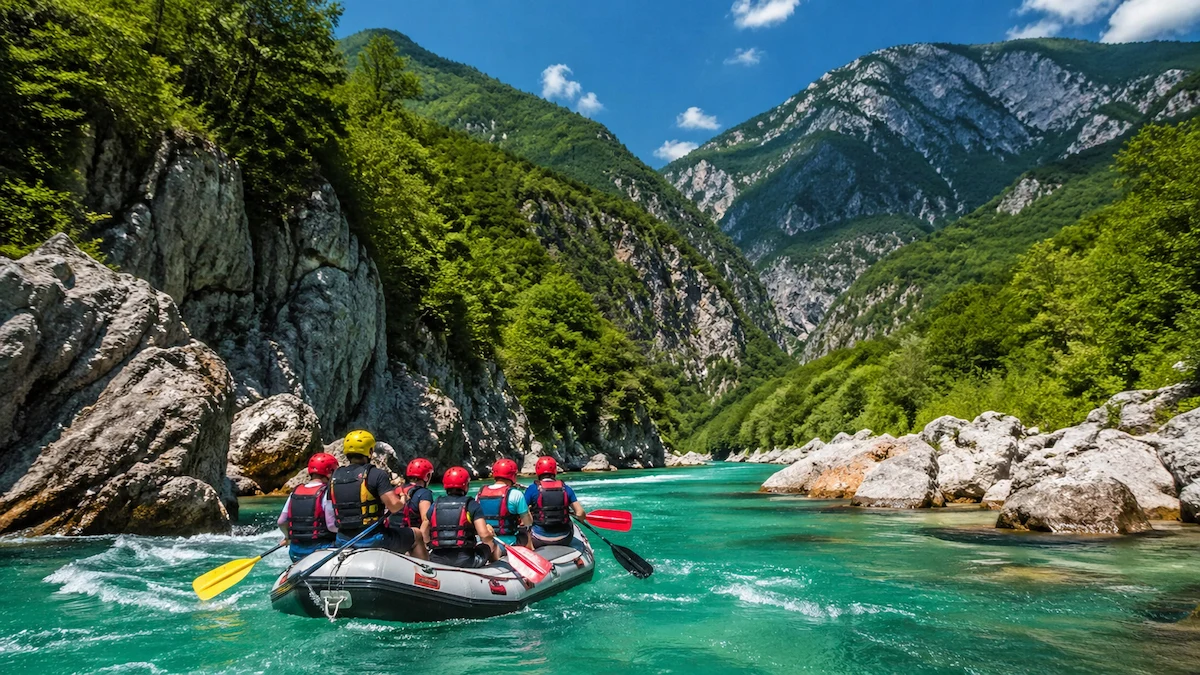
Rafting the Tara isn’t some obscure activity that needs an agency to arrange. A handful of family-run camps near Šćepan Polje have been doing this for thirty years. They speak English, they reply on WhatsApp within the hour, and their boats and guides are exactly the same ones the booking platforms resell to you with a markup on top.
You don’t need a middleman. You need to know who to message.
Where the Tara actually is?
When you book “Tara rafting from Budva,” the rafting itself isn’t in Budva. It’s three to four hours north, near the Bosnian border. What you’re really paying for is transport, the rafting, and lunch.
Most one-day trips launch from Brštanovica, an upriver point you reach by camp shuttle, and finish at Šćepan Polje, where the camps are clustered. The 18-kilometer run between them takes two to three hours on the water.
Here’s how far you actually have to travel:
| From | Drive to Šćepan Polje | Same-day return |
| Žabljak | 1h 15min | Easy |
| Podgorica | 2h 30min | Yes |
| Kotor | 3h 30min | Tight |
| Budva | 3h 45min | Tight |
| Tivat | 3h 45min | Tight |
A one-day trip from the coast means eight hours in a vehicle plus three on the river. Doable, but long. Most people enjoy it more if they sleep one night at a riverside camp or build it into a couple of days around Žabljak.
The three rafting options worth knowing about
The half-day classic. Brštanovica to Šćepan Polje, 18 kilometers, two to three hours on the water. This is what most people do. Arrive in the morning, suit up, take the camp’s shuttle upriver, paddle back down, eat lunch at the camp. Total time on site is around five hours.
The full descent. Splavište to Šćepan Polje, around 100 kilometers, two or three days. You sleep in basic eco camps along the canyon, no road access for most of it, food cooked over fire, swims in side streams that pour straight off the cliffs. Around 180€ to 280€ per person. The version serious nature lovers come for.
Žabljak-based family rafting. A shorter, calmer two-hour stretch that passes under the Đurđevića Tara Bridge. Sold as “family rafting” because the rapids are gentler. Good for kids around 7 to 12, or anyone who just wants a taste without the long drive to Šćepan Polje.
Quick guide to which fits which traveler:
| You are | Best route |
| A couple, day trip from the coast | Brštanovica run |
| Family with younger kids | Žabljak-based half-day |
| Family with teens | Brštanovica run |
| Adventure-minded, have time | Multi-day Splavište |
| Visiting in May or early June | Brštanovica only |
Why direct booking saves you serious money?
Same boat, same skipper, same plate of food. Different price.
Online platforms typically take 25 to 30 percent commission, and many resell through additional layers of agents. Your money gets split three or four ways before the operator sees their share.
Here’s what a standard one-day rafting trip with lunch costs in 2026, depending on where you click:
| Booked through | Typical price |
| The camp directly | 60 to 75€ |
| Hotel concierge | 85 to 100€ |
| Online activity platform | 95 to 130€ |
| Coastal travel agency | 100 to 140€ |
What you actually get when you book direct?
The price isn’t the only thing that changes.
When you message a camp directly, you usually deal with the same person from the first inquiry to breakfast the next morning. They know your name. Pickup time, dietary preference, an extra night, you ask once and it’s handled.
Almost always included direct, often missing or extra on platforms: full neoprene gear and helmet, life jacket, English-speaking briefing, transport from camp parking to launch point, and a real meal afterward. The grilled meat, soup, and homemade bread the camps serve isn’t the same as a platform “lunch,” which is often a sandwich and a bottle of water.
When platforms actually make sense
Two situations only.
You’re booking last-minute and don’t have time to message anyone. Or the camp only takes cash and bank transfer, and you really need to pay by card. Some Tara operators still prefer transfers and a small arrival deposit, which doesn’t suit everyone. In that case, a platform booking is a fair fallback.
Otherwise, message direct.
How to spot a serious operator?
Not every camp is run with the same care. The good ones have been operating since the early 2000s and their skippers have done thousands of descents. The newer ones popped up to chase the tourism wave, and they cut corners.
A few things worth checking:
IRF licenses: The International Rafting Federation certifies professional whitewater guides. Reputable operators only work with IRF-licensed skippers. If a website doesn’t mention this, ask. The good ones will answer immediately.
Boat capacity: A standard raft fits eight guests plus a guide. Some operators try to squeeze in nine or ten. Confirm in advance.
High-water policy: In late April and early May, snowmelt can push the Tara into Class V. Serious operators reschedule or refund when it’s unsafe. Ask directly: “What happens if conditions are dangerous?” If they promise to “always go out, no matter what,” book elsewhere.
Recent reviews: Look at the last six months on Google, not the highlight reel on the operator’s own website. Recent feedback about communication, safety, food, and group sizes is what matters.
The other adventures around the canyon
Once you’re up there, rafting is just the headline act. Most of these are also worth booking direct, for the same reasons.
Canyoning at Nevidio: Nevidio Canyon, on the Komarnica River near Šavnik, is one of the most beautiful canyoning routes in Europe. You’re rappelling down waterfalls, jumping into cold pools, and squeezing through narrow passages for about four hours. Direct with a Žabljak or Šavnik operator: 70€ to 90€. On platforms: 130 to 170€. This is also an activity where your guide really matters, water levels change fast and the human in charge needs to know the canyon by feel.
Zip-line at Đurđevića Tara Bridge: Don’t book this one in advance. Drive up, walk to the booth, pay 15€ to 20€ in cash, fly across. Takes 90 seconds. Camps often bundle it for around 15€ if you raft with them the same day.
Jeep safari through Durmitor: Most rafting camps offer this as an add-on. Old Russian UAZ or Land Rover, a local driver, logging roads and shepherd tracks to viewpoints normal tourists never see. 40€ to 60€ per person. Slow, bumpy, worth it, especially at sunset.
ATV and quad rides: A few camps run quad fleets through pine forests on the Bosnian side of the canyon. 50 to 70€ for a couple of hours. Not peaceful, the engines aren’t quiet, but if your teenagers are bored of looking at scenery, this works.
Horseback riding from Žabljak: Family-run stables in nearby villages offer guided rides through alpine meadows. 25 to 35€ per hour. Best booked by phone the day before. Some routes include a stop at a shepherd’s hut for cheese and homemade rakija.
Guided hiking: For Bobotov Kuk, the highest peak in Durmitor at 2,523 meters, a guide adds context and a safety margin if the weather turns. 40 to 60€ per person for a full day. For easier walks like the Crno Jezero loop, you’re fine on your own. Our Durmitor guide covers what else is up there.
When to come, and when not to raft?
Each month on the Tara has its own personality.
April to early May. Cold, wild, serious. Trips get cancelled when water gets too high. For experienced rafters only.
Late May and June. The sweet spot for adrenaline. Water still high but predictable, rapids sharp, canyon green, camps not yet packed.
July and August. Peak family season. Lower water, gentler rapids, hot days. Camps are full, so book at least two weeks ahead, a month for weekends.
September. Many regulars argue this is the best month. Smaller crowds, water still warm enough for swims at the breaks, autumn colors starting on the canyon walls. Prices often drop.
October. Quiet and increasingly cold. By mid-October most camps shut down. If you don’t mind a chilly afternoon in a wetsuit, you might have the river almost to yourself.
One detail most articles skip: the river is too cold to swim in May, and even in August water rarely climbs above 11 or 12 degrees Celsius. The wetsuit isn’t optional.
What to bring, and what they actually give you
The camps provide the technical gear: 5mm wetsuit, neoprene boots, helmet, life jacket, paddle, waterproof jacket if it’s raining. Nothing to buy.
What you bring: swimsuit to wear under the wetsuit, small towel, sunglasses with a strap, reef-safe sunscreen, a change of clothes for after, a waterproof phone pouch if you want photos, and cash for tips and the zip-line.
What you leave at the camp office: wallet, most of your cash, car keys (they hold them in a safe), watches, jewelry, and any cotton t-shirts. Cotton soaks through and turns cold immediately.
The drive there is half the experience
If there’s one stretch of road in Montenegro worth taking your time on, it’s the route to Šćepan Polje. From the coast, the most common path runs through Podgorica and Nikšić, then west through the Piva canyon along Lake Piva, an underrated drive that hugs the water for about 40 kilometers, with tunnels carved straight into the cliff face.
The alternative is through Žabljak and over the Sedlo Pass: more dramatic, slower, only fully open from late May to October. For a multi-day trip, take Piva in and Durmitor out. Two completely different countries in one loop.
This is one of the clearest cases for renting a car here. Bus options to the canyon are limited and time-consuming. With your own vehicle you set the pace, you stop where the views are best, and you have someone to call if anything comes up on the road, which matters more in the north than on the coast. Renting locally makes that part straightforward, and for trips that combine the canyon, Durmitor, and the coast, a monthly rental usually beats stitching together separate weekly bookings.
A 3-day Tara and mountains itinerary that actually works
Day 1. Leave Budva or Kotor in the morning. Through Podgorica and Nikšić to Plužine, where simple restaurants overlook the lake. Continue along the Piva canyon to Šćepan Polje, check into a riverside camp by mid-afternoon. Eat whatever they’re cooking, sleep with the sound of the river outside. Around 4 hours of driving.
Day 2. Rafting in the morning, finishing around 1pm. Lunch at the camp. In the afternoon, drive to Žabljak (about 1h 15min) and do a short Durmitor Ring with stops at Sedlo Pass and Crno Jezero. Sleep in Žabljak.
Day 3. Easy morning around Crno Jezero or a short hike. Drive back south via Šavnik and the Mratinje dam, or via Nikšić if you want a faster road. On the coast by evening. 4 to 5 hours.
Add a fourth day if you want to fit Nevidio canyoning, which deserves its own day. For more on what else is in this part of the country, our guide to Montenegro’s national parks covers Biogradska Gora and Prokletije.
Book the experience, not the package
The rafting community on the Tara is small and well-established. Operators reply quickly, speak good English, and care about their reputation because everyone in the canyon knows everyone else. Adding a middleman costs you money and slows down everything else.
Same logic for canyoning, jeep safaris, horseback rides, guided hikes. Small family operators, better service when you contact them directly.
Come up to the canyon, raft the Tara, eat the lamb, sleep next to the river, drive home through the mountains. One of the best three or four days you can have in Europe, and it doesn’t have to cost what the package sites quote.