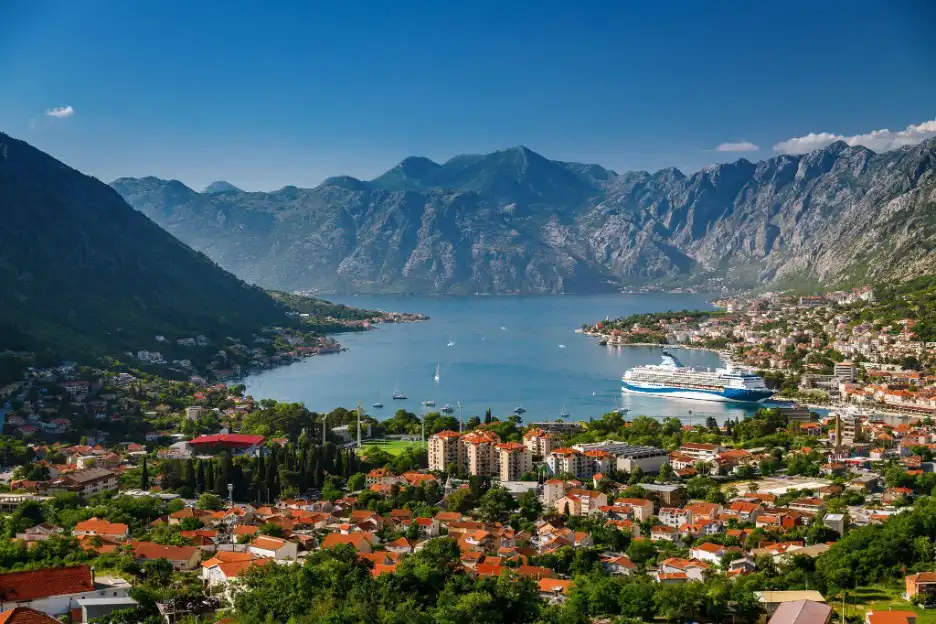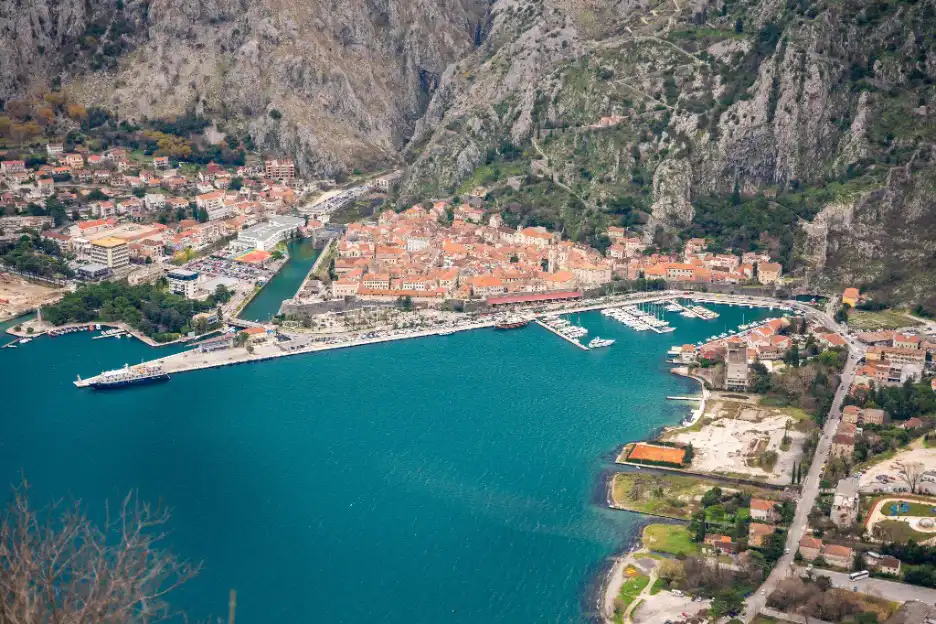
Montenegro may be small country, but in just two hours of driving, you can travel from the Mediterranean coast to snow-covered mountains. Knowing these differences will help you pack smart and plan your trip better.
Three Climates, One Country
Montenegro has three distinct climate zones packed into a very compact territory.
Сайт Adriatic coast, including Budva, Kotor, Herceg Novi, Bar, and Ulcinj, has a Mediterranean climate with hot, dry summers and mild, rainy winters. It gets about 2,500 hours of sunshine each year, similar to some parts of Spain.
Сайт central inland area, which includes the capital Podgorica and the region around Lake Skadar, gets noticeably hotter in summer and cooler in winter. Podgorica is one of the hottest cities in Europe, regularly exceeding 35°C in July and August, with a record high of 44.8°C.
Сайт northern mountains, like Žabljak, Kolašin, and Durmitor, have a true alpine climate. Winters are long and snowy, with temperatures often falling below -20°C during cold spells. Summers are cool and great for hiking.
Here’s a fun fact: the village of Crkvice, above the Bay of Kotor, is one of the wettest places in Europe, getting over 4,600 mm of rain each year. Podgorica is the rainiest capital in Europe, with the highest annual rainfall. Still, summers across the country are surprisingly dry and sunny.

Spring (March – May)
Spring comes slowly. March is still cool and rainy on the coast, with temperatures between 12 and 16°C. By April, sunny days increase, wildflowers start to bloom, and the coast warms up to a comfortable 19°C.
May is when Montenegro really shines. Coastal temperatures reach 24°C, the mountains turn green, and national parks like Durmitor, Biogradska Gora, and Prokletije open around May 1st. The sea is still a bit cool for swimming at about 18°C, but the views are amazing and there are fewer tourists.
Spring is ideal for sightseeing, road trips, and hiking at lower elevations. In the mountains, higher crossings like the Durmitor Ring may stay snow-covered until mid-May.
Summer (June – August)
Summer is peak season for good reason. The coast sees 28-30°C days, up to 11 hours of sun, and little rain. The sea peaks at 25°C in August, ideal for swimming and beach days.
June is perfect warm and swim-friendly at 21°C, but without the crowds and heat of July and August. In those months, towns like Budva and Kotor get busy with tourists, roads are crowded, and accommodation prices go up.
Podgorica often exceeds 35°C in midsummer; if visiting, plan activities for morning or evening.
The mountains provide a cool escape. Žabljak and Kolašin stay at 19-22°C, making summer ideal for hiking, rafting, and exploring national parks.
Afternoon thunderstorms can happen in the mountains even during summer, so be sure to bring a light rain jacket.
Autumn (September – November)
September is an ideal time to visit Montenegro: coastal temperatures are 23-27°C, the sea keeps warm at 23°C, crowds and prices drop, and the light takes on a golden tint.
October is mild on the coast (18-23°C); the sea is warm enough for hardy swimmers at 20°C. Mountain forests in Durmitor and Biogradska Gora glow with brilliant autumn colors a truly underrated experience.
By November, rain returns to the coast, and mountain temperatures drop. This marks the off-season, with shorter days and cooler weather.
Winter (December – February)
Winter on the coast is mild but rainy, with temperatures between 7 and 14°C. Snow is very rare in places like Budva and Kotor, but the cold Bura wind can suddenly lower temperatures across the Bay of Kotor. Coastal towns become quiet and atmospheric, with hazy mornings over the bay, empty Old Town streets, and lower prices on everything.
The mountains are a completely different story. Žabljak and Durmitor receive heavy snowfall, and ski season runs from December through March at resorts like Kolašin 1450, Kolašin 1600, and Savin Kuk. Conditions can be extreme, the famous Black Lake often freezes solid enough to walk on, and snow depths can exceed several meters.
Podgorica is cool in winter, averaging around 5-6°C in January, with occasional frost and rare light snow.
Sea Temperature at a Glance
The Adriatic Sea along the Montenegrin coast follows a clear seasonal pattern. From January through April, the water stays cold at 14–15°C. It warms to 18°C in May, crosses the comfortable swimming threshold of 20°C in June, and peaks at 24 – 25°C in July and August. September keeps warm at 23°C, October is still manageable at 20°C, and by November, the sea cools down to 17°C.
The comfortable swimming season runs from June through September, with July and August being the warmest months.
What to Pack
For a summer coastal visit, light clothing is all you need, with perhaps a light layer for cooler evenings. If you plan to head into the mountains in summer, bring a light jacket and a rain layer for afternoon thunderstorms. For spring and autumn, layered clothing works best mornings can be cool while afternoons are warm. And for winter, pack warm, waterproof clothing everywhere, with full winter gear if visiting the mountains.
Why Weather Matters for Your Road Trip
Because Montenegro is so compact, you can see big weather changes in just one day of driving. A road trip from the warm coast up to the cool mountains and back is one of the best ways to explore the country. But it also means you need to be ready for anything. Having your own car lets you follow the sunshine, escape the summer heat in the mountains, or find a quiet spot on the coast when popular places get crowded.
At Инвиктус Виа, we are based in Budva and know these roads and weather conditions inside out. Whether you are exploring the dramatic Bay of Kotor, driving up to Durmitor, or heading south to Ulcinj, we are happy to help you plan the perfect route for any season. Just get in touch we are always here for you.